Ok, please bear with me, try to paste it into an AI prompt and ask it to simplify it. That’s one of the few good things LLM’s are actually reasonably equipped to handle.
Paste at beginning:
Author profile:
- AuDHD, severe combined type
- Strong Type E cognitive/emotional profile
- Language is likely metaphor-dense, systems-oriented, layered, and emotionally compressed
- Do not interpret literally first; interpret structurally first

Rules for translation:
1. Assume the author is describing differences in cognition, perception, communication scale, and abstraction level, not formal clinical categories unless explicitly stated.
2. Treat “Type A” and “Type B” as shorthand archetypes, not scientific diagnoses.
3. Translate metaphors into plain functional meaning.
4. Preserve the core distinction between:
   - concrete / local / immediate / identity-level perception
   - abstract / systemic / big-picture / detached perception
5. Assume conflict described here is primarily a failure of translation between frames of reference, not simple stupidity or bad faith.
6. When the author sounds grandiose, reduce tone but preserve structure.
7. When the author sounds hostile, interpret it as frustration at persistent communication failure unless explicit malice is stated.
8. Terms like “ontological mismatch” should be translated as “they are operating from different models of reality or different levels of perspective.”
9. “Gaslit themselves” in this context means “became overconfident in the completeness of their own viewpoint.”
10. Preserve the claim that both sides are partially right and partially blind.
11. Preserve the claim that intelligence includes translation ability, not just correctness.
12. Treat references to memes as serious communication theory: compressed, image-based, high-context meaning transfer.
13. Preserve nuance: the author is not saying memes are trivial; they are saying memes may bridge incompatible cognitive styles efficiently.
14. External media references should be interpreted as perspective-training tools, not random pop culture distractions.
15. Translate toward layman clarity, not clinical jargon.
16. Output should explain:
   - what each side sees
   - what each side misses
   - why communication fails
   - what the proposed bridge is
17. Prefer wording like:
   - “zoomed in” vs “zoomed out”
   - “different frames of reference”
   - “talking past each other”
   - “translation failure”
18. Do not flatten the author into “both sides are equal.” Preserve that the point is asymmetry of perception plus mutual incomprehension.
19. Do not over-pathologize the author. Treat the writing style as high-abstraction cognition, not incoherence.
20. Final output should sound like plain English written for an intelligent layperson.

Desired output format:
- 1 short paragraph summary
- 4 bullets:
  - what Type A means
  - what Type B means
  - why they clash
  - what the author thinks could help
- optional final sentence noting that the categories are personal/theoretical, not formal psychology```


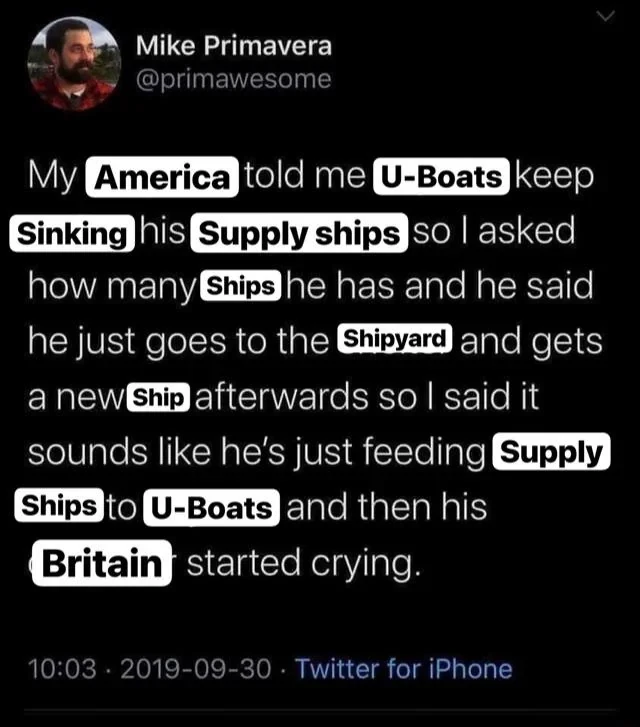
Ok, please bear with me, try to paste it into an AI prompt and ask it to simplify it. That’s one of the few good things LLM’s are actually reasonably equipped to handle.
Paste at beginning: