There’s always a better perfect solution. If you’re not willing to work for something achievable because your special vision for how things should be is the only thing you care about, well, that’s why leftists fight each other instead of fighting the fascists that have taken over the usa and are in the process of taking over the rest of the world.
I mean, that is the situation stated? Unless you mean “You are forbidden from engaging in abolitionism ever again”, which is generally not what people object to when they decry ‘reform’, which rarely, if ever, comes with such terms in the contexts it’s discussed in on here.
Choices should be made fundamentally on two issues: reduction of suffering, and improvement of strategic positioning. If it does both, it is morally necessary to take it. If it helps one goal, but does not harm the other goal, it is morally necessary to take it. If it helps one goal, but harms the other goal, you must make your own estimation of the relative value of each.
Freeing 500 slaves reduces suffering. Ceteris paribus, it also improves strategic positioning. If an argument can be made that, in context, it degrades strategic positioning, then the choice becomes more ambiguous, but the emphasis here is on ‘degrades’, not simply ‘does not improve’. But you’d better be ready with a damn good argument for keeping 500 people in chains on strategic grounds when you could very well free them, and not just a general feeling of ‘All or nothing’.
That’s true, the hypothetical I posed isn’t remotely analogous to the perfection vs harm reduction debate. I have a tendency to fixate on questions I find interesting regardless of how realistic or practical they are.
Do the thing that helps now and work to do the things that help in the future as well. Why would I allow 500 slaves to remain in servitude just because I can’t free all 1,000 right now?
You’d be in favour having some slave states and some non-slave states instead of fighting a civil war to end slavery.
But wouldn’t you be in favor of not having any non-slave states until you could assure that there were no slave states? Thus eliminating the political and demographic power which allowed the abolitionists to be a faction strong enough to contest a civil war?
What it comes down to is a matter of trust. For example, let’s say there’s a strike going on and management makes a generous offer, but it would only apply to the senior employees. If the union accepts this, then the newer employees will feel like the union is only working for the people who have been there longer, and are less likely to take risks or stick their necks out for the “common good,” because that “common good” seems to benefit some people more than others.
Now, with the workers divided, they have less power and less ability to resist whatever the company decides. In time, even the senior employees may end up worse off.
However, I do agree with you that you don’t have to do everything at once. Small victories can serve as a proof of concept, showing tangible results of organization. But there’s a difference between a small victory that’s shared or fair and a small victory that only benefits part of a coalition and serves essentially as a bribe.
In the hypothetical of “freeing half the slaves” it’s kind of impossible to answer from a purely theoretical standpoint, it depends on the specific conditions. If the level of trust and political consciousness is high enough, then the ones who benefit can be trusted to keep fighting for the others and the others won’t feel betrayed or left behind. But if it’s a fledgling coalition and opportunists are present, then it’s a recipe for the whole thing to fall apart.
Every proletarian has been through strikes and has experienced “compromises” with the hated oppressors and exploiters, when the workers have had to return to work either without having achieved anything or else agreeing to only a partial satisfaction of their demands. Every proletarian—as a result of the conditions of the mass struggle and the acute intensification of class antagonisms he lives among—sees the difference between a compromise enforced by objective conditions (such as lack of strike funds, no outside support, starvation and exhaustion)—a compromise which in no way minimises the revolutionary devotion and readiness to carry on the struggle on the part of the workers who have agreed to such a compromise—and, on the other hand, a compromise by traitors who try to ascribe to objective causes their self-interest (strike-breakers also enter into “compromises”!), their cowardice, desire to toady to the capitalists, and readiness to yield to intimidation, sometimes to persuasion, sometimes to sops, and sometimes to flattery from the capitalists.
Example, ACA, there’s been no real talk from Dems after “compromising with Republicans” to pass that to try and make it better. To maybe go with the original plan of universal healthcare for all and not health insurance for all.
People get complacent after doing some, it’s always better to do it all than half arse it and promise to come back later.
To some degree, this is correct - people tend to leave behind the passion once they’ve done something about it. But this is a reason to do as much as one canwith the circumstances given, regardless of worrying whether it is ‘too radical’ to last; not a reason to refuse to do anything that doesn’t immediately result in the end-goal of your ideology.
Put another way, this argument could be used to oppose anarchist organizing - after people do a little for the revolution, like organizing, they tend to get complacent. Only immediate and violent action in service to revolution is moral.
Plus it y’know actually stops the suffering rather than prolonging it but lesser.
But it doesn’t stop the suffering until it succeeds, if it succeeds.
Which is the better outcome? Someone wanting to save 10,000 lives, but failing to save anyone’s life; or someone who wants to save 1,000 lives, thinking it’s all they can do (rightly or wrongly), and succeeds in saving 500?


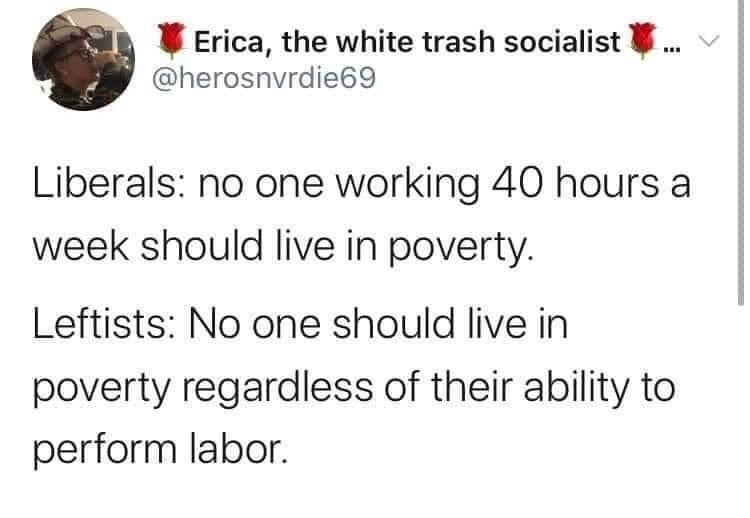
Don’t let perfect be the enemy of good.
Order of operations matters.
There’s always a better perfect solution. If you’re not willing to work for something achievable because your special vision for how things should be is the only thing you care about, well, that’s why leftists fight each other instead of fighting the fascists that have taken over the usa and are in the process of taking over the rest of the world.
You have 1,000 slaves. Do you accept freeing 500 instead of fighting for all to be free?
Fight for what’s right, fuck compromise that perpetuates suffering. That’s what centrists do.
Accepting freeing 500 doesn’t mean stopping the fight to free the other 500.
Should the Union during the US Civil War have refused to free any slaves until it could guarantee all slaves would be free?
I think the proposed situation is that the slavers will agree to free 500 slaves if you let them keep the other 500. Would you take the deal?
I mean, that is the situation stated? Unless you mean “You are forbidden from engaging in abolitionism ever again”, which is generally not what people object to when they decry ‘reform’, which rarely, if ever, comes with such terms in the contexts it’s discussed in on here.
Choices should be made fundamentally on two issues: reduction of suffering, and improvement of strategic positioning. If it does both, it is morally necessary to take it. If it helps one goal, but does not harm the other goal, it is morally necessary to take it. If it helps one goal, but harms the other goal, you must make your own estimation of the relative value of each.
Freeing 500 slaves reduces suffering. Ceteris paribus, it also improves strategic positioning. If an argument can be made that, in context, it degrades strategic positioning, then the choice becomes more ambiguous, but the emphasis here is on ‘degrades’, not simply ‘does not improve’. But you’d better be ready with a damn good argument for keeping 500 people in chains on strategic grounds when you could very well free them, and not just a general feeling of ‘All or nothing’.
That’s true, the hypothetical I posed isn’t remotely analogous to the perfection vs harm reduction debate. I have a tendency to fixate on questions I find interesting regardless of how realistic or practical they are.
No worries, I understand that completely, I often do the same thing!
Do the thing that helps now and work to do the things that help in the future as well. Why would I allow 500 slaves to remain in servitude just because I can’t free all 1,000 right now?
You refused to compromise, and now you have 1000 slaves. But at least you can tell yourself you did the right thing, as the slaves, slave on.
Because refusal to compromise = never succeeding?
You’d be in favour having some slave states and some non-slave states instead of fighting a civil war to end slavery.
But wouldn’t you be in favor of not having any non-slave states until you could assure that there were no slave states? Thus eliminating the political and demographic power which allowed the abolitionists to be a faction strong enough to contest a civil war?
No, I’d compromise to buy time, until I can stab the confederates in the back, duh.
Does freeing 500 take 1% of the effort of freeing all 1k? Do the 500 first and then start working towards freeing the rest.
Now, this requires actually doing the second part, but some good actually done is better than all the good wished for but none done.
What it comes down to is a matter of trust. For example, let’s say there’s a strike going on and management makes a generous offer, but it would only apply to the senior employees. If the union accepts this, then the newer employees will feel like the union is only working for the people who have been there longer, and are less likely to take risks or stick their necks out for the “common good,” because that “common good” seems to benefit some people more than others.
Now, with the workers divided, they have less power and less ability to resist whatever the company decides. In time, even the senior employees may end up worse off.
However, I do agree with you that you don’t have to do everything at once. Small victories can serve as a proof of concept, showing tangible results of organization. But there’s a difference between a small victory that’s shared or fair and a small victory that only benefits part of a coalition and serves essentially as a bribe.
In the hypothetical of “freeing half the slaves” it’s kind of impossible to answer from a purely theoretical standpoint, it depends on the specific conditions. If the level of trust and political consciousness is high enough, then the ones who benefit can be trusted to keep fighting for the others and the others won’t feel betrayed or left behind. But if it’s a fledgling coalition and opportunists are present, then it’s a recipe for the whole thing to fall apart.
People get complacent after doing some, it’s always better to do it all than half arse it and promise to come back later.
Plus it y’know actually stops the suffering rather than prolonging it but lesser.
Example, ACA, there’s been no real talk from Dems after “compromising with Republicans” to pass that to try and make it better. To maybe go with the original plan of universal healthcare for all and not health insurance for all.
To some degree, this is correct - people tend to leave behind the passion once they’ve done something about it. But this is a reason to do as much as one can with the circumstances given, regardless of worrying whether it is ‘too radical’ to last; not a reason to refuse to do anything that doesn’t immediately result in the end-goal of your ideology.
Put another way, this argument could be used to oppose anarchist organizing - after people do a little for the revolution, like organizing, they tend to get complacent. Only immediate and violent action in service to revolution is moral.
But it doesn’t stop the suffering until it succeeds, if it succeeds.
Which is the better outcome? Someone wanting to save 10,000 lives, but failing to save anyone’s life; or someone who wants to save 1,000 lives, thinking it’s all they can do (rightly or wrongly), and succeeds in saving 500?
It’s almost like reality has nuance and shit.