Thank you so much for the in depth reply. My adult daughter is trans and I’m trying to learn about this world. I understand I shouldn’t generalize, but I feel I’m unequiped to even have a frame of reference of what not to generalize. I don’t know if my daughter is cis or lesbian; she had one relationship at college that ended with an assault on her. I’m not even sure if the relationship was romantic or platonic before the assault. The minimal info she told me about it she always used non gendered terms. Of course I don’t want to pry, and I understand that my main function is to be supportive no matter what, but I just would like to know if there are baseline assumptions that I’m supposed to have.
Well, for one, if she’s trans, she is by definition not cis. Did you mean straight? Because cis (short for cisgender) means that someone’s gender identity aligns with their sex at birth, whereas trans means it does not align; they’re opposites.
I’m assuming you meant straight, so I’ll just say that sexuality is a very complicated thing and it can take a very long time for someone to really discover their interests. Some people even choose not to define it because they’re unsure. But the best advice I can give you is that it’s her choice to come out to you when she feels comfortable and/or understands her sexuality. I also want to clarify that there is a whole plethora of sexualities out there beyond strictly straight or gay. Far more people are bisexual than strictly gay/lesbian, for instance. I really just wouldn’t make any assumptions even if you did know the gender of who she was with (because again, bi people exist).
Also understand that while sexuality itself doesn’t change, one’s perception of their sexuality might. For instance, I had a short time where I thought I was bisexual, and identified myself as such, but I’m absolutely, 100% a lesbian. During that moment though, my perception of my own sexuality was that I was bisexual, so just keep in mind that even if she did reveal her sexuality, finding yourself and understanding your sexuality can be very complicated, so things may change.
It’s really safest not to make assumptions. I also urge you to consider why you want to know so badly. As a gay woman, I am a huge supporter of the phrase “love is love”. The gender of the people she loves should realistically be inconsequential to how you should treat her for loving them. After all, you’ve pointed out that you want to be supportive, so I want to perhaps introduce you to the idea that she should be supported the exact same way no matter her sexuality. For all we know, she could be asexual/aromatic, and that’s just as valid. Just food for thought!
Thanks so much. I have a lot to learn. And I don’t ‘want to know so badly’. I just want to know what I’m supposed to know. She’s never communicated a huge amount about anything - often just a few words and then I’m expected to understand and I’m worried I’ll miss something not knowing the trans world. I’m terrified that if I ask her questions it will come across as challenging or unsupportive. She suffers from anxiety and low confidence already. But she doesn’t really have any real life friends, so I know I have to be there however I can.
Honestly, that’s a great question to ask her. She will share what she knows and feels comfortable sharing.
Another great option would be seeing if there is a queer bookstore near you. If there is, I would ask the people there about some books you can read, there are plenty aimed at parents of queer people who need a primer on the terminology.
Honestly, so many of us have parents that don’t accept us, so being willing to learn is already great. Maybe also keep an eye out for how you can help and support any friends she brings home, or try to get involved in your local queer community. I find that a lot of queer people don’t have many accepting parental figures in their life and just inviting some local queer kids over for dinner every now and again could really change lives. (And as a plus, being around queer people will teach you the lingo over time.)


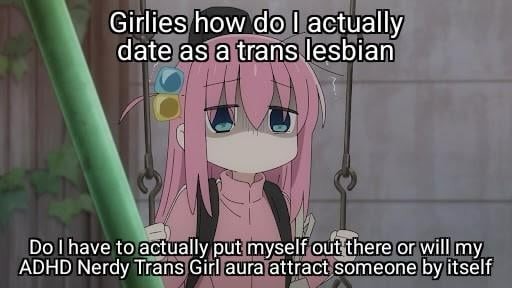
Thank you so much for the in depth reply. My adult daughter is trans and I’m trying to learn about this world. I understand I shouldn’t generalize, but I feel I’m unequiped to even have a frame of reference of what not to generalize. I don’t know if my daughter is cis or lesbian; she had one relationship at college that ended with an assault on her. I’m not even sure if the relationship was romantic or platonic before the assault. The minimal info she told me about it she always used non gendered terms. Of course I don’t want to pry, and I understand that my main function is to be supportive no matter what, but I just would like to know if there are baseline assumptions that I’m supposed to have.
Well, for one, if she’s trans, she is by definition not cis. Did you mean straight? Because cis (short for cisgender) means that someone’s gender identity aligns with their sex at birth, whereas trans means it does not align; they’re opposites.
I’m assuming you meant straight, so I’ll just say that sexuality is a very complicated thing and it can take a very long time for someone to really discover their interests. Some people even choose not to define it because they’re unsure. But the best advice I can give you is that it’s her choice to come out to you when she feels comfortable and/or understands her sexuality. I also want to clarify that there is a whole plethora of sexualities out there beyond strictly straight or gay. Far more people are bisexual than strictly gay/lesbian, for instance. I really just wouldn’t make any assumptions even if you did know the gender of who she was with (because again, bi people exist).
Also understand that while sexuality itself doesn’t change, one’s perception of their sexuality might. For instance, I had a short time where I thought I was bisexual, and identified myself as such, but I’m absolutely, 100% a lesbian. During that moment though, my perception of my own sexuality was that I was bisexual, so just keep in mind that even if she did reveal her sexuality, finding yourself and understanding your sexuality can be very complicated, so things may change.
It’s really safest not to make assumptions. I also urge you to consider why you want to know so badly. As a gay woman, I am a huge supporter of the phrase “love is love”. The gender of the people she loves should realistically be inconsequential to how you should treat her for loving them. After all, you’ve pointed out that you want to be supportive, so I want to perhaps introduce you to the idea that she should be supported the exact same way no matter her sexuality. For all we know, she could be asexual/aromatic, and that’s just as valid. Just food for thought!
Thanks so much. I have a lot to learn. And I don’t ‘want to know so badly’. I just want to know what I’m supposed to know. She’s never communicated a huge amount about anything - often just a few words and then I’m expected to understand and I’m worried I’ll miss something not knowing the trans world. I’m terrified that if I ask her questions it will come across as challenging or unsupportive. She suffers from anxiety and low confidence already. But she doesn’t really have any real life friends, so I know I have to be there however I can.
Honestly, that’s a great question to ask her. She will share what she knows and feels comfortable sharing.
Another great option would be seeing if there is a queer bookstore near you. If there is, I would ask the people there about some books you can read, there are plenty aimed at parents of queer people who need a primer on the terminology.
Honestly, so many of us have parents that don’t accept us, so being willing to learn is already great. Maybe also keep an eye out for how you can help and support any friends she brings home, or try to get involved in your local queer community. I find that a lot of queer people don’t have many accepting parental figures in their life and just inviting some local queer kids over for dinner every now and again could really change lives. (And as a plus, being around queer people will teach you the lingo over time.)