The conversation is about human death. The question is at what point is a human being considered dead. If cellular function is brought into it, then a rotting corpse is teeming with bacterial life.
You are right that biological functions of the human body can continue well past the point that someone would be broadly considered dead. I just think that a lack of brain function is a good classification of when to consider that someone has died.
The conversation is about what makes a “corpse”.
If the brain dead body still performs the majority of its biological functions, that’s not really a corpse.


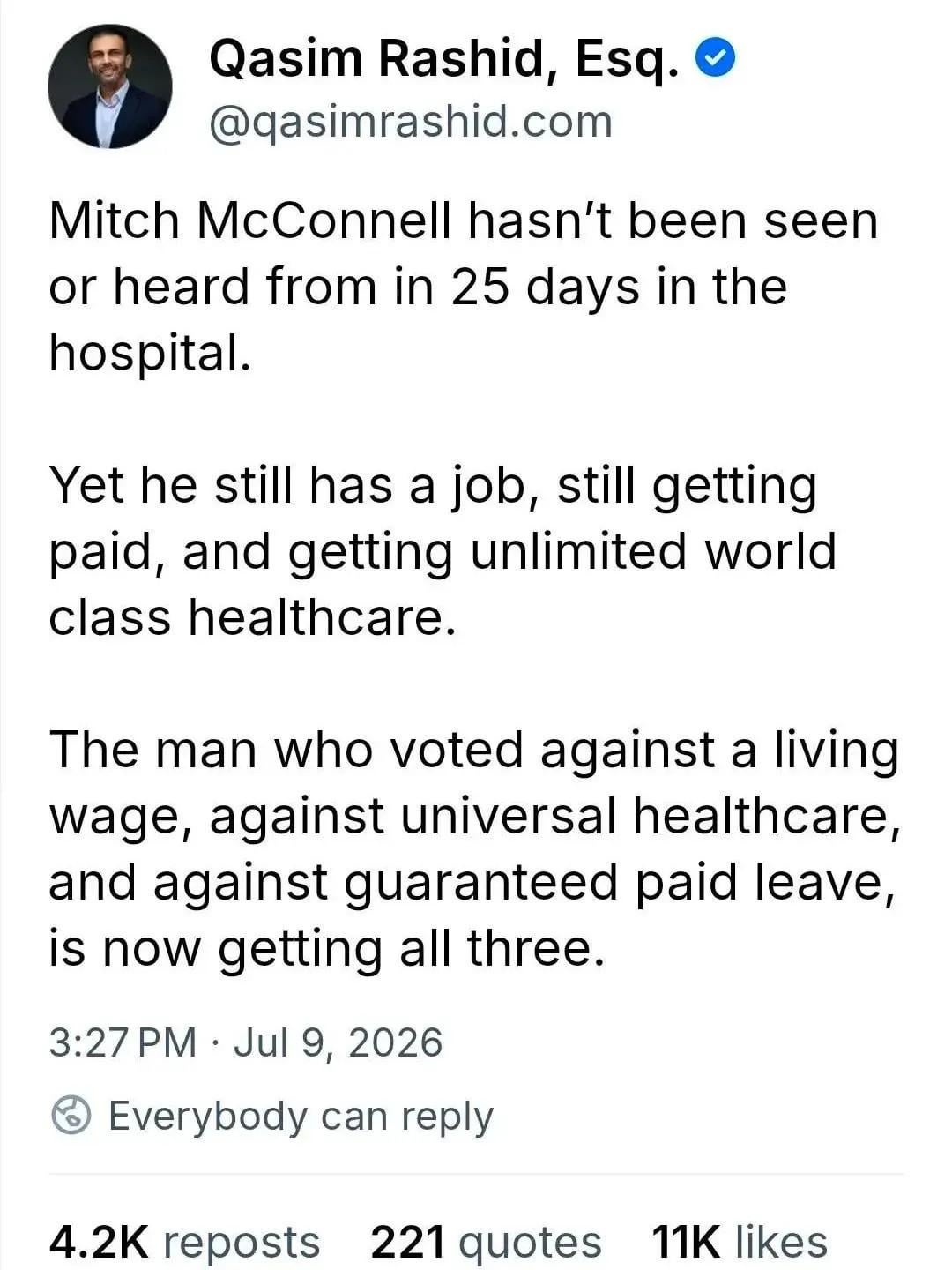
Brain death is death. He’s dead https://en.wikipedia.org/wiki/Brain_death
If brain death is dead, single cell organisms are dead.
We’re not single called organisms
Of course not. But the definition of death you gave, doesn’t distinguish between forms of life.
The conversation is about human death. The question is at what point is a human being considered dead. If cellular function is brought into it, then a rotting corpse is teeming with bacterial life.
You are right that biological functions of the human body can continue well past the point that someone would be broadly considered dead. I just think that a lack of brain function is a good classification of when to consider that someone has died.
The conversation is about what makes a “corpse”.
If the brain dead body still performs the majority of its biological functions, that’s not really a corpse.
Yeah the current definition pretty much says a lot of dead stuff together is making one living being