Tell your relatives that this IS the phishing test email. If you click that link, you’re gonna get busted by your IT department.
Never click links (or for that matter, ads) in emails. Always verify the sender first. Not the display name, the actual email address that it was sent from.
If you must go to a link, best to find out what website they’re sending you to (hover over the link for the URL), then type in the main website manually from a web browser.
For example, if you get an email from US Bank (assuming you use them), type “usbank.com” (minus quotation marks) in your browser, then login to your personal bank account on their official website. Don’t trust a link to a bank’s website without typing it yourself. Don’t just copy/paste the full URL from your email either.
Some links, even to legitimate websites, can have tracking data in the URL that gives a lot of info about you, where in the world you’re browsing from, what web browser you’re using, what website, app, or program you clicked the link from, etc. Basically, remove the ? and everything after it in URLs before loading them in your browser.
These are just a few basics to protect yourself from malicious links. Basically, don’t click any link you don’t recognize and verify with people who send you links. And even then, protect yourself from idiots who forward links without doing their own spot checks. Even your best friends can send you viruses and malware. Heck, that’s how a lot of it spreads across the Internet.
And especially don’t trust your own IT department when they ask you to click links in their emails.


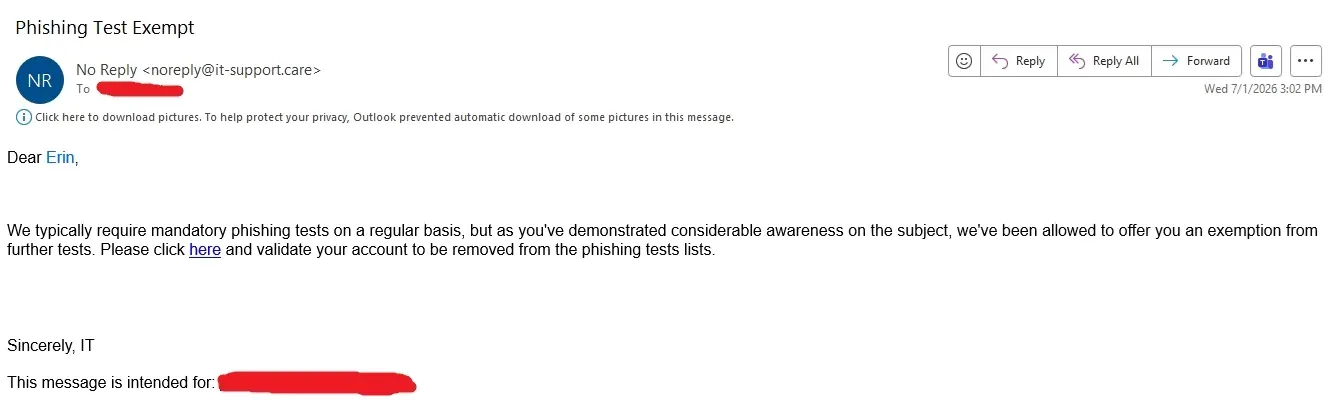
Tell your relatives that this IS the phishing test email. If you click that link, you’re gonna get busted by your IT department.
Never click links (or for that matter, ads) in emails. Always verify the sender first. Not the display name, the actual email address that it was sent from.
If you must go to a link, best to find out what website they’re sending you to (hover over the link for the URL), then type in the main website manually from a web browser.
For example, if you get an email from US Bank (assuming you use them), type “usbank.com” (minus quotation marks) in your browser, then login to your personal bank account on their official website. Don’t trust a link to a bank’s website without typing it yourself. Don’t just copy/paste the full URL from your email either.
Some links, even to legitimate websites, can have tracking data in the URL that gives a lot of info about you, where in the world you’re browsing from, what web browser you’re using, what website, app, or program you clicked the link from, etc. Basically, remove the ? and everything after it in URLs before loading them in your browser.
These are just a few basics to protect yourself from malicious links. Basically, don’t click any link you don’t recognize and verify with people who send you links. And even then, protect yourself from idiots who forward links without doing their own spot checks. Even your best friends can send you viruses and malware. Heck, that’s how a lot of it spreads across the Internet.
And especially don’t trust your own IT department when they ask you to click links in their emails.
Sincerely,
~A former IT guy