I think it’s more accurate to say it’s a measure of risk , but it leads to the same result. Good, consistent repayment history means you are a known low risk. Without that consistent and recent history you are an unknown risk. Giving credit to low risk borrowers is where the profit is.
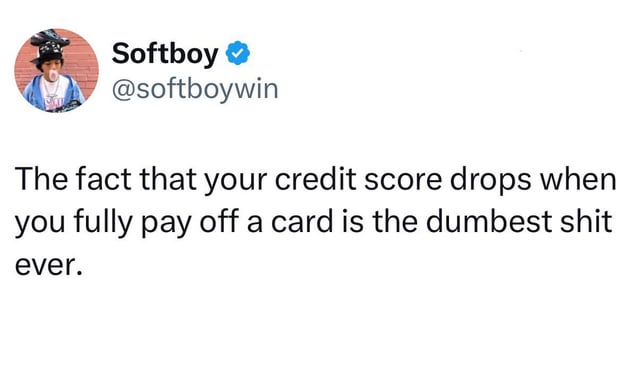
If you pay off a loan, your credit score will likely decrease. Why would someone who’s able to pay off a loan be considered a higher risk than someone who pays $x a month to slowly pay down the same amount?
It’s absolutely about potential profit over risk. In the latter situation, the bank makes way more money.
I received a letter that my capital one credit card account was going to be closed because I haven’t used it in a year or two. They don’t like people who don’t use the cards or pay them off every month. It ends up costing them money
You’re correct about the late payers and minimum payment


I think it’s more accurate to say it’s a measure of risk , but it leads to the same result. Good, consistent repayment history means you are a known low risk. Without that consistent and recent history you are an unknown risk. Giving credit to low risk borrowers is where the profit is.
You’re missing their point.
If you pay off a loan, your credit score will likely decrease. Why would someone who’s able to pay off a loan be considered a higher risk than someone who pays $x a month to slowly pay down the same amount?
It’s absolutely about potential profit over risk. In the latter situation, the bank makes way more money.
It’s not just risk (negative income fot them), it is also the potential gain.
A guy that gets stuck in debt via overdraft all the time, but manages to scrounge just enough extra income to pay it off, is a gold-mine for them.
I received a letter that my capital one credit card account was going to be closed because I haven’t used it in a year or two. They don’t like people who don’t use the cards or pay them off every month. It ends up costing them money
You’re correct about the late payers and minimum payment
20+% interest is legal loan shark
They are a higher risk because they no longer have an active demonstration of reoccurring on time payments.