

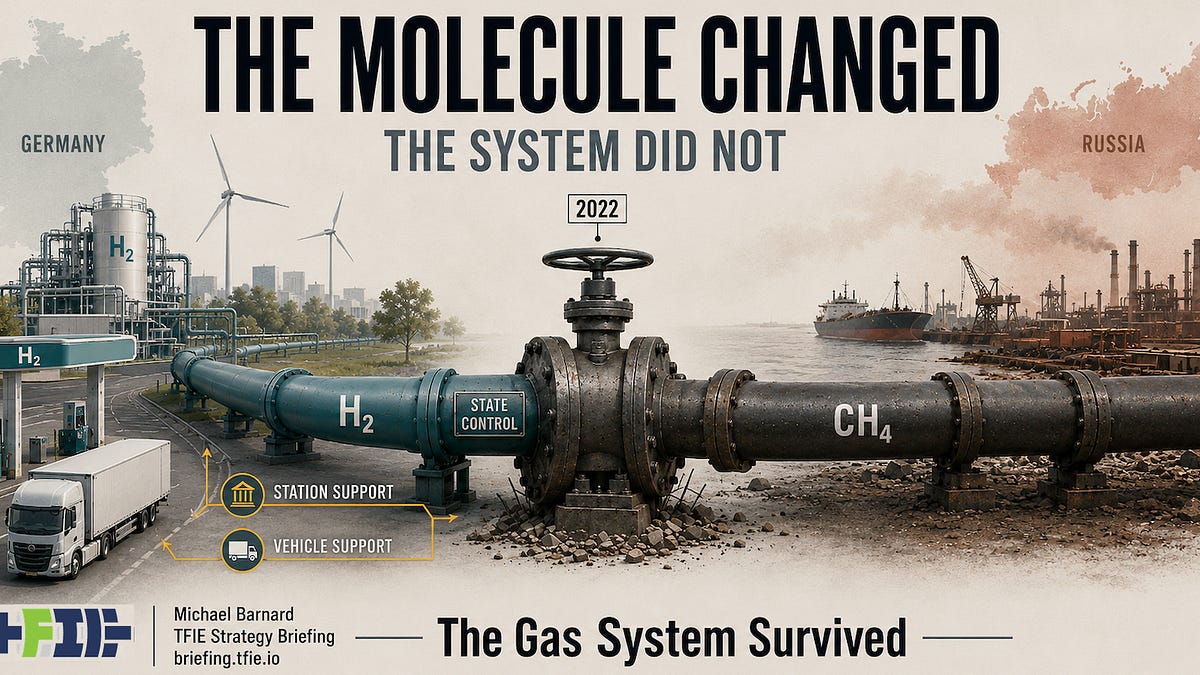
Germany is paying for the station and paying for enough trucks to give the station some customers. That is more than solving a chicken-and-egg problem. It is buying the chicken, the egg and the first few breakfasts.
This would be less interesting if it were an isolated transport experiment. It sits at the end of a much longer effort to give Germany’s gas institutions, infrastructure and industrial constituencies a future after the collapse of Russian gas.
Gerhard Schröder remains the most visible symbol of how close the relationship became. Gazprom owned 51% of the original Nord Stream company and appointed four of the eight members of its shareholders’ committee. Schröder, who had just left the German chancellery, was one of Gazprom’s appointees and became chairman.
Hydrogen is a lot higher density than batteries, but nowhere on the scale of diesel.
Under about 150 mile range batteries are winning due to minimum equipment needs, above that hydrogen has a place in mobile storage.