Personally I’m for single payer, but I recognize that’s not a popular opinion and only represents the opinion of 30% of the USA.
This is why I find it hard to believe DSA is big tent. They have very specific ideas that they misrepresent their minority as a majority popular opinion (like single payer), and seem to have purity tests within their ranks. I don’t see big tent when I look at the DSA. There’s individuals within the group I like, but I’m realizing those are more exceptions. The Bernie Sanders era is gone, and I’m not sure where to find that kind of progressive political platform these days.
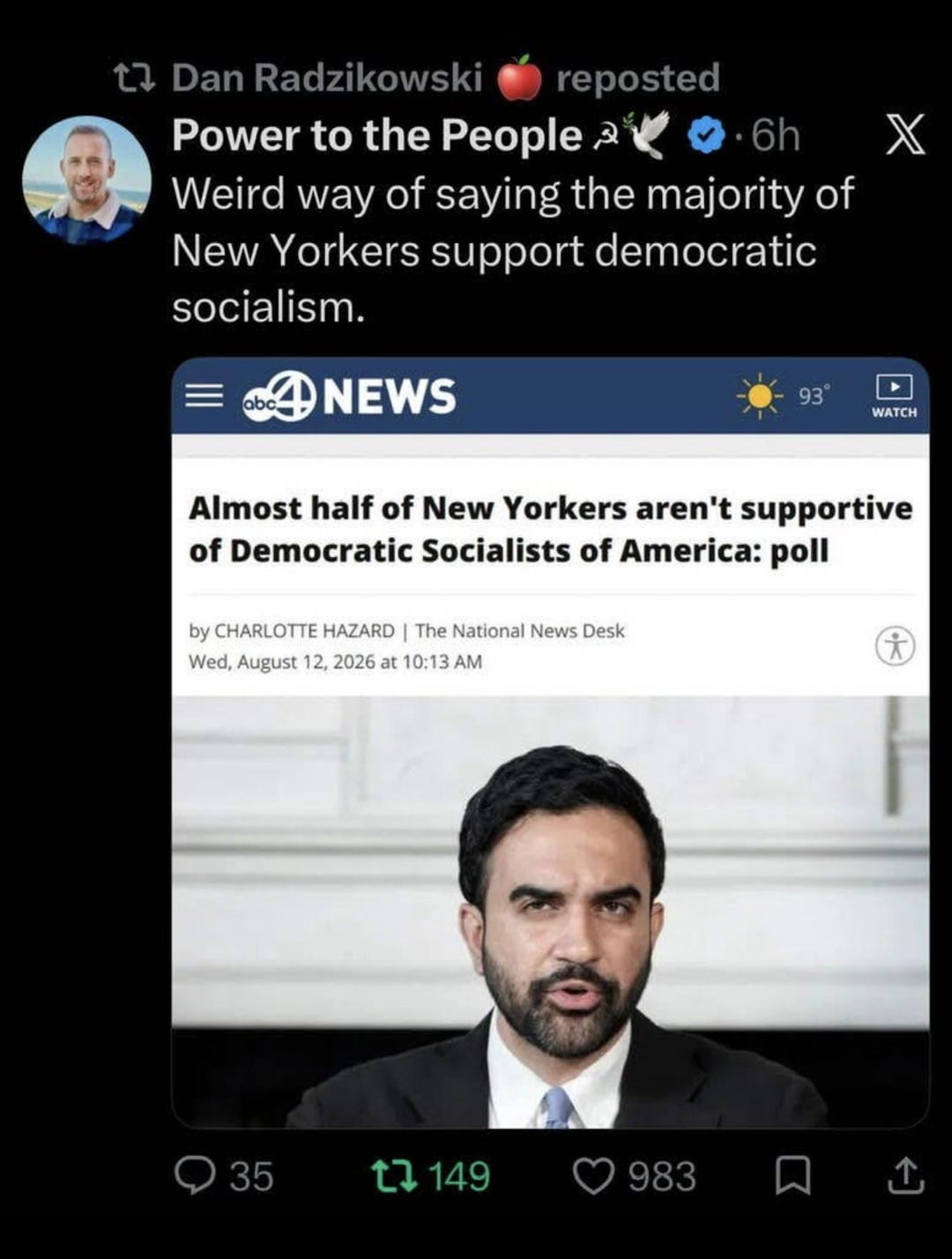
It’s frustrating hive mind tactic I see more online that if centrist democrats have a disagreement with the DSA, the DSA supporters cry that they don’t represent the majority. But look at the data and polling, and DSA doesn’t represent the majority either.
I don’t imagine the model we use for UH is going to be a wedge issue, at least not the way the Gaza genocide is. We don’t need something that is a perfect model for each and every citizen, just one that more or less works. ACA was a step forward, albeit was deliberately sabotaged by the Republican party from its inception.
In fact, most policies and social safety nets were not perfect from the beginning. The Constitution of the United States, itself, had to go through an Articles of Confederation phase.
What is going to be tricky is figuring out how to elect to power only people who want to govern in good faith, so that the institutions we erect can be corrected and improved with time. The big failing of feudalism is that the works of ten good kings can be reduced to ash by one tyrant, and even singular good kings are often the exception. As Jamille Bouie observes, we elected a madman knowing who he is and what his intentions are, and that raises some serious questions about the capacity of the American people to self govern, or if stable large human societies are even possible.


The majority people believe in universal healthcare with government funding, but it’s pretty much 50/50 split if that means single payer or blend of private and public options or subsidies. https://www.pewresearch.org/short-reads/2025/12/10/most-americans-say-government-has-a-responsibility-to-ensure-health-care-coverage/
Personally I’m for single payer, but I recognize that’s not a popular opinion and only represents the opinion of 30% of the USA.
This is why I find it hard to believe DSA is big tent. They have very specific ideas that they misrepresent their minority as a majority popular opinion (like single payer), and seem to have purity tests within their ranks. I don’t see big tent when I look at the DSA. There’s individuals within the group I like, but I’m realizing those are more exceptions. The Bernie Sanders era is gone, and I’m not sure where to find that kind of progressive political platform these days.
It’s frustrating hive mind tactic I see more online that if centrist democrats have a disagreement with the DSA, the DSA supporters cry that they don’t represent the majority. But look at the data and polling, and DSA doesn’t represent the majority either.
I don’t imagine the model we use for UH is going to be a wedge issue, at least not the way the Gaza genocide is. We don’t need something that is a perfect model for each and every citizen, just one that more or less works. ACA was a step forward, albeit was deliberately sabotaged by the Republican party from its inception.
In fact, most policies and social safety nets were not perfect from the beginning. The Constitution of the United States, itself, had to go through an Articles of Confederation phase.
What is going to be tricky is figuring out how to elect to power only people who want to govern in good faith, so that the institutions we erect can be corrected and improved with time. The big failing of feudalism is that the works of ten good kings can be reduced to ash by one tyrant, and even singular good kings are often the exception. As Jamille Bouie observes, we elected a madman knowing who he is and what his intentions are, and that raises some serious questions about the capacity of the American people to self govern, or if stable large human societies are even possible.