


Before video arcade games, there were electromechanical arcade games. Periscope was from Sega, released around 1965 in Japan and 1966 in the US. It was Sega’s first coin-op arcade game, and put Sega on the map. Wikipedia says:
Periscope popularized the quarter (US$0.25) cost per play of arcade games in the United States.
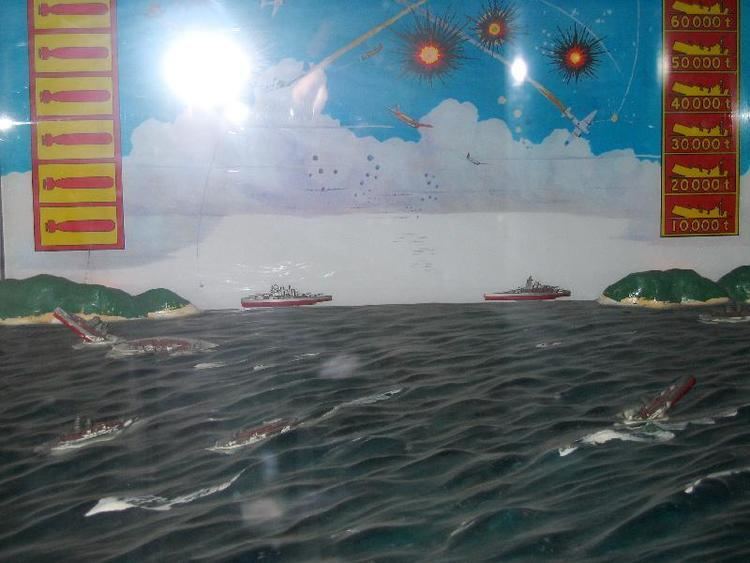
It looked like this, in play,
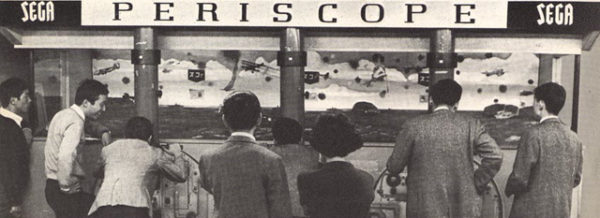
They made large, 3 player ones! An absolute unit of an arcade machine,

A little over $2.50 in 2026 dollars. I assume it’s because it was advanced for it’s time. I imagine people would pay similarly at modern VR arcades.
Wikipedia also says the machines cost arcades $1,295 then, equivalent to around $12,000 in 2025 dollars, which was around twice the price of most machines. So they’d need let’s say 5K plays to recoup the machine cost, assuming 100% profit. Of course they had costs too, rent, salaries, repairs, so in practice it would be a lot more than that. Multiple 10K’s maybe?
I wonder if it was considered a success. I think arcade machines were supposed to pay for themselves in less than two years.
I think it was. Wikipedia says,
I only know what I skimmed on some vintage arcade sites, but I have the impression that this game is why Sega succeeded in the early days of the company. It was an expensive cabinet, but it was also advanced and attracted a lot of players.
Periscope swam so Sonic could run.
This is a really deep comment.