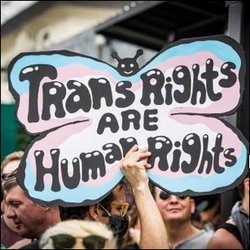


Nearly four in five Canadians (78%) say they have at least some knowledge of transgender, gender-diverse, and Two-Spirit people and issues. Almost half (45%) personally know someone who is transgender, gender-diverse, or Two-Spirit. Personal familiarity is associated with greater knowledge, stronger recognition of discrimination, and higher support for rights and legal protections.
Canadians express moderate comfort with having a transgender person as their neighbour (56%), working alongside a transgender colleague (54%), or having a transgender healthcare provider (48%), with 30%-37% indicating that they are “very comfortable.” A consistent proportion of roughly one-quarter are neutral and 24% or fewer are uncomfortable in each case.
If you’re only going after my afterthought I don’t see a point in having this conversation. Also, why are insisting on AGAB terminology here, I don’t see how someone’s birth certificate is more relevant than e.g. which puberty they (first) went through (if we’re talking trans people, those are meaningful distinctions)
Because their AGAB is usually established by their biology at birth, and arguing with biology is a losing fight most of the time. But, you’re right in that their birth certificate has no relevance, which is why I transitioned to referring to them as XX and XY instead.
But to your further point, it’s been solved in recreational sports since before we as a society were ready to admit trans people existed. Coed rec sports leagues have existed for 30 years. One of the ways in which they solve that is going completely non-contact. If the league folks are wanting to join isn’t non-contact, though, there will, on average, be a disadvantage. And the only way you’re going to establish there absolutely isn’t a disadvantage is by violating their medical privacy.