

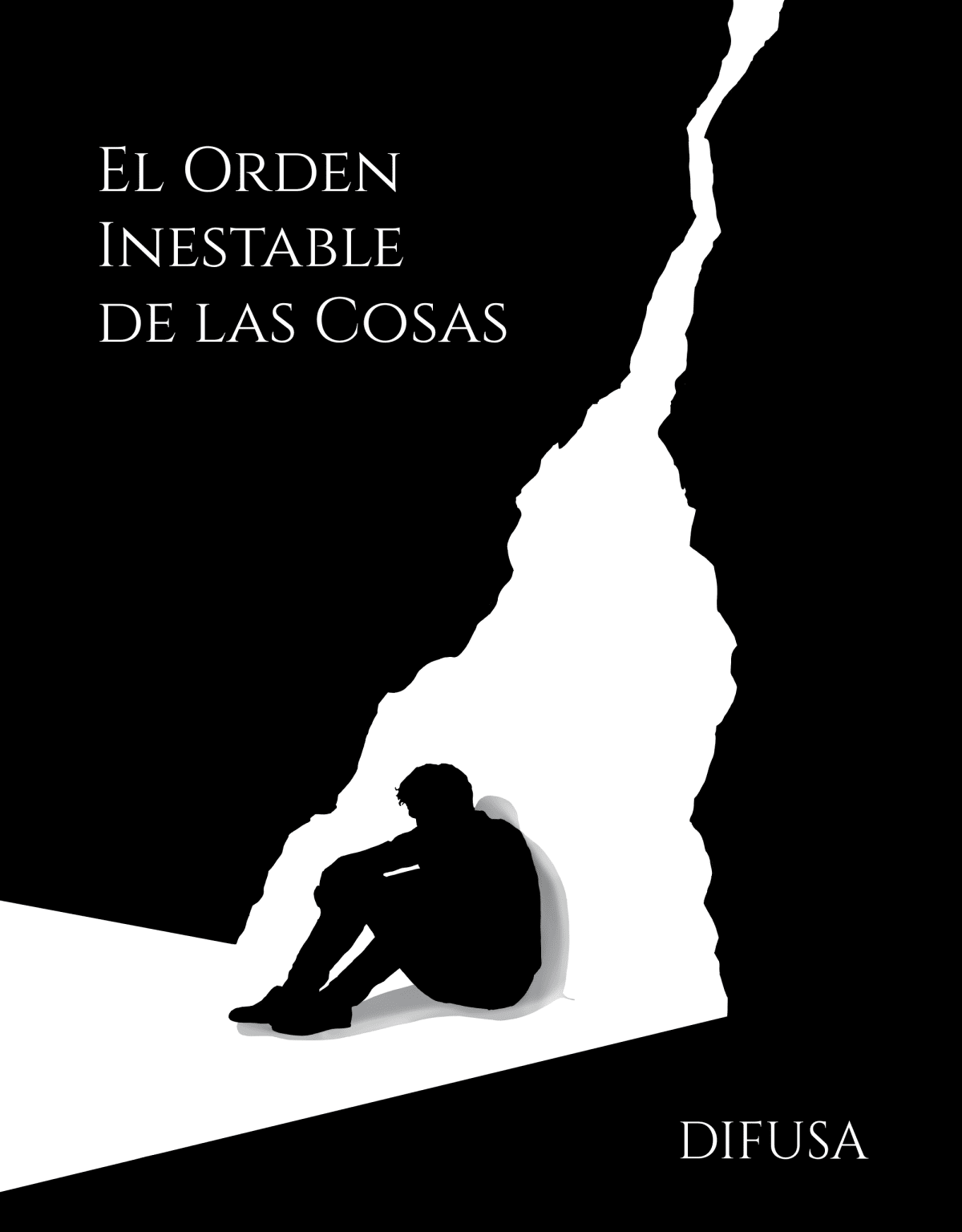
The Unstable Order of Things
Chapter 5: “PARASITE”
Between the hours swallowed by lectures, the gray, gusty days that autumn had begun to weave, and the lack of anything to do beyond studying and maintaining my sanity, I spent most of my time lying around, paralyzed by inertia. I couldn’t even watch my old TV; it had given up the ghost, and the technicians claimed parts were no longer available. So, I lay there reading—mostly the dry, tedious scraps of books I’d gathered at the previous year’s book fair and left rotting on my shelf. To kill the time, I wielded the greatest weapon of all: music.
Patricio had lent me a Sony Walkman—a portable CD player he’d received as a birthday gift. In those days, it was one of the most sophisticated objects a person could own. And for good reason. Until then, many of us had to settle for the communal stereo in the living room, which we rarely got to use; it was either occupied, broken, or in the shop. Someone was always studying and needed silence, or someone had already staked a claim, or someone wanted to hear something else. Or, quite simply, your taste was “shit,” and that was the end of it.
But that Walkman was spectacular. I could listen to the discs I had bought primarily to collect rather than play. I could listen to them uninterrupted, at any hour, for hours on end, from start to finish, over and over. No one was going to stroll through the living room to tell me my music was garbage, that it was boring, or that I should put on a Gilda track or the new hit by La Champions Liga.
My bedroom had a tiny, rectangular window that stretched across the width of the wall, just inches above the desk. Occasionally, I’d crack it open; I liked the way the wild, cool autumn wind swept into the room, dragging a stray withered leaf with it. I would linger there, listening to The Cure on Patricio’s Walkman, trying to decipher the outfits of the people walking on the opposite sidewalk. I knew they were there. The sound of people living was imminent. The screech of bus brakes, the whistles of the street parking attendants, the roar of engines and the honking of horns when the lights turned green and the world realized it was late for work.
On non-lecture days, I woke up around eight to study. If someone was in the bathroom—and someone was always in the bathroom—I’d wait until ten to pee and brush my teeth. If someone was in the kitchen—and someone was always in the kitchen—I wouldn’t go down. I forced myself to wait until noon. By then, my head was a broken machine, its gears rusted and jammed, spinning in the exact opposite direction of where they were meant to go.
One day, during one of those weekends, Joaquín entered my room after asking permission. It hadn’t been long since we’d last seen each other, but enough time had passed to pretend we’d forgotten the look of bewilderment on each other’s faces before he’d vanished down the hall to his room. We hadn’t even crossed paths since. Our schedules were a series of missed connections; I had few classes, all in the afternoon, while he was out every morning at the crack of dawn. On my free afternoons, he was off playing football. At lunchtime, I was rehearsing with my cast; at dinner, he was at Lili’s or eating choripanes in the park with his teammates.
What unsettled me most was that, beyond these logistical misses, there was nothing. No voices through the hole in the wall, no knocks, no shared glances. One day, I peeked under the poster; it was still covered from his side. No more “borrowing” my things—caps, hammers. No more hands on my shoulder while my back was turned, trying to guess his restless movements. Is this as far as we go? I wondered with a sharp pang of anguish. Did I imagine the whole thing? I even questioned. So, it caught me off guard when he asked to come in that day, without warning, without anesthesia.
He walked to my desk and took a seat in the rolling chair. Silent as a specter, the door didn’t even creak, as if he were the ghost you’ve grown accustomed to living with—the one who still startles you when he knocks a book off the shelf. He had a board game tucked under his arm. Perhaps someone had told him my TV was dead, that I was now without music—having returned the Walkman to Patricio—and that I was studying like a man condemned, more depressed than autumn itself.
I am filled with rage when I remember that I chose to do other things. To lie to myself, for instance. Long before I lied to Joaquín, I had lied to myself. I lied to both of us long before we met in that hallway. And it is difficult to write this, perhaps as difficult as it is to remember. It is hard to realize what I could have done and didn’t do, knowing full well I should have. And it is, by far, even harder to make myself believe that all of this actually happened.
“So, you remembered I exist,” I said ironically, watching him from the edge of the bed as he slumped into my chair.
“Ah, hello. It’s not like you came looking for me either,” he shot back, spinning around. He had Monopoly on his lap. “Close that window, look how cold it is.”
I closed it and latched it shut.
“What happened to your TV?” he asked, nodding toward the now-obsolete set sitting by the door. “Patricio told me it broke.”
“Since when do you talk to Patricio?”
The idea of Patricio’s world and Joaquín’s world merging in conversation seemed improbable—an eccentric event that surely should have happened under my very nose.
“What are you, a cop?” he inquired, an eyebrow arched.
“It scares me that you talk to Patricio.”
“Patricio is scary,” I agreed. We laughed. “He was at Lili’s this morning. Went for breakfast and some photocopies.”
“The photocopies were probably an excuse to go to her house. He loves Lili’s place.”
He was there too, but the absurd notion of commenting on that detail was as disturbing to both of us as simply letting it pass. It made no sense, and I wasn’t about to poke my own wound just to watch it bleed. Tacitly, we both decided to ignore the detail, to treat it as normal.
He spent nearly the whole day with me. Together on the floor, playing Monopoly. His patient voice reading the rules, his feet clad in long, striped socks, the howl of the wind through the glass, my bed pillows serving as seats, the door ajar, a Diego Torres song drifting in like a whisper from another room. Every so often, we’d get derailed by a conversation, completely forgetting the game or whose turn it was. We’d start over; we’d cheat.
I remember that day vividly. It’s no coincidence; I felt that nothing could improve, just before he doused me with a bucket of cold water without warning.
He told me about his family, those rumored millionaire parents I’d heard so much about. His father was from Bilbao, Spain, where he had met his mother years ago. She was Argentine—from Catamarca, specifically—and had inherited two or three major wineries in the north that bore her name: Lara Burdeos. His father and mother were, in his words, “one hundred percent compatible.” He told me that when his mother got pregnant, they decided to return to Argentina to focus on the wineries and raise their son among the mountains and the animals, where she had always lived. His father didn’t hesitate. He would have done anything for that woman. So, when Joaquín was born, they doubled their love and poured it into him. They made a fortune; they traveled whenever they pleased. And that was how he grew up, just as I’d grown tired of describing.
I wish the anecdote ended there—where Joaquín’s family has a baby and they love each other and are happy. I wish it ended before his eyes filled with restless tears as he spoke. Before I was sitting on the floor across from him, listening to a magical family history I found hard to believe because it looked nothing like the world I knew. I wish I could go back to the moment before he told me his mother had died of cancer two years ago, and that his father had spiraled into a depression that cost him his sense of self. I wish he never had to tell me, looking me straight in the eye, that at the end of the year, he was going back to Spain with him so his father could find himself again.
“What do you want me to do?” he asked, half-resigned, half-shattered. “My old man is split down the middle. I can’t leave him alone, not now. I have to go with him; I want to. Maybe when he recovers, I can come back, but I can’t stay now. Studies? Well, I’ll see. There are universities in Spain. I’ll start over or find a job. I don’t know. I’m not thinking about that now. I just want him to be okay.”
Joaquín leaned forward and patted my knee. It was a cold, unexpected gesture. He patted my knee as if it were the head of a stray cat, or a dusty cushion. For a heartbeat, I thought he was going to take my hand—my hand hanging from the wrist resting on that very knee. I thought he would squeeze it hard and force me to look up from the board, even if looking was the last thing I wanted to do. But he just patted my knee and did nothing else.
Why didn’t you take my hand that day? I’d like to ask him now. Do you ever wonder where we’d be if you had taken my hand that afternoon? If you hadn’t abandoned me before you’d even left?
“When are you leaving?”
“November, maybe, or December. After finals.” I nodded. I wanted to kick him out, to go to sleep. “Don’t tell anyone. No one knows yet.”
“Lili doesn’t know?” He shook his head. “How? Why not?” I asked, somewhat indignant. “You have to tell her.”
“No, not her.”
“Why?”
“Because she still needs me.”
I nodded and said nothing—not because there was nothing to say, but because I was certain that if the conversation continued, we would never see each other again. I wanted to pluck one of the thousands of excuses from my mental catalog and rid myself of him. So, I suggested we put the game away; I told him I was tired. He agreed. I couldn’t stand having him in front of me anymore—looking up and seeing him twirl his hair out of nerves while his mind wondered what he’d said or done wrong. We had curious ways of finding each other’s weak spots, of discarding one another.
We exchanged a few hollow words, more for politeness than pleasure. He gave me a high-five and a playful shove, as if I were one of his football buddies, and vanished. Every fiber of interest had frozen over. We were paying for something that hadn’t even broken yet.
Did you weigh your words before you spoke them? I would say to him now, grabbing him by the collar because, suddenly, I want to hurt him. Did you meditate on them, especially while I was right there in front of you, aching to hear them?
She needs you?
And you’re leaving anyway?
What’s my excuse, then, for us to ever meet again?..
…"
–“Continue reading and experience the original text in Spanish at https://fictograma.com/. Join our open-source community of writers today!”–