Supposedly the meds for pets don’t have the same safety regulations as the ones for humans but I’m not sure how much that matters, especially currently
I have filled several meds for my pet and for myself
Shhhh, don’t give away the secret! Also, kiss your local veterinarian for their wonderful insight into your pet’s medical conditions that match yours. It’s true what they say: a person often looks a lot like their dog.
When I said the same pill, I meant it’s from the same manufacturer with the same imprints as the ones I have.
A pharma company isn’t going to set up another production line just for vet meds. At worst they’re selling batches that are outside the FDA’s margin of error. But I even doubt that since they’re not going to want veterinarians to stop buying their products.
They charge so much for people because they know people will spend it. They know people won’t spend $600 on antibiotics for their pets.
the meds for pets don’t have the same safety regulations as the ones for humans
Depends on the meds. Most medication for animals is from the same production line as humans, its just overflow stock or stuff that didnt meet the quality standards.
Human medicine is tightly controlled, not by governing bodies, but by the manufacturer. They artificially limit availability to create shortage in human medicine, as this produces the highest profit. How is simple, the stuff that doesnt meet the quality standards gets immediately labeled and shipped as pet medicine (this creates a surplus keeping costs low), but the expiry dates are kept intentionally very short (Which expiry on most medication is mostly a lie, fyi). This ensures constant rollover.
The rest is stored, unlabled except for a printed internal production run number, to identify when it was produced. Its labled as-needed to control where it is going. This keeps prices high and gives them room.
This is why 80+% of pet medication is the same quality and standards as human medication, but doesnt have the markup. the ~20% is the actual stuff that didnt meet quality standards. So while you could just use pet medication, without quality testing each vial or dose(in the case of pills), you run the risk of contaminants.
The solution: Price regulation like other countries do. The problem is the manufacturer has too much control over the pricing. They may still try to reduce production, to control the price, but regulation can fine them over this as well. Its all easy solutions and it all involves preventing corruption.

Supposedly the meds for pets don’t have the same safety regulations as the ones for humans but I’m not sure how much that matters, especially currently
It just means that your options are limited for suing over bad products.
My options for suing are already limited by how much it costs to sue
This is why class actions.
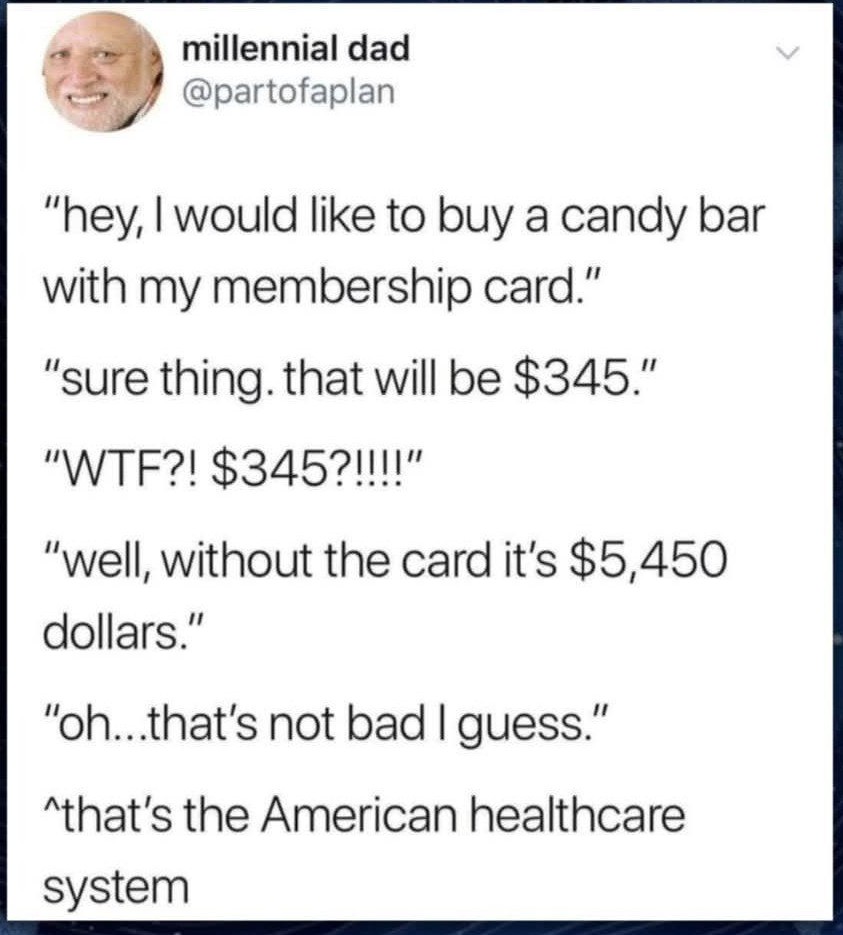
Candybar: $5 the option to sue: $340
chance of success: 30% Payout: $5 (after lawyer fees, and splitting with other class-action plaintiff’s)
I have filled several meds for my pet and for myself at the same pharmacy. Same pill, same manufacturer, same lots.
Shhhh, don’t give away the secret! Also, kiss your local veterinarian for their wonderful insight into your pet’s medical conditions that match yours. It’s true what they say: a person often looks a lot like their dog.
When I said the same pill, I meant it’s from the same manufacturer with the same imprints as the ones I have.
A pharma company isn’t going to set up another production line just for vet meds. At worst they’re selling batches that are outside the FDA’s margin of error. But I even doubt that since they’re not going to want veterinarians to stop buying their products.
They charge so much for people because they know people will spend it. They know people won’t spend $600 on antibiotics for their pets.
Depends on the meds. Most medication for animals is from the same production line as humans, its just overflow stock or stuff that didnt meet the quality standards.
Human medicine is tightly controlled, not by governing bodies, but by the manufacturer. They artificially limit availability to create shortage in human medicine, as this produces the highest profit. How is simple, the stuff that doesnt meet the quality standards gets immediately labeled and shipped as pet medicine (this creates a surplus keeping costs low), but the expiry dates are kept intentionally very short (Which expiry on most medication is mostly a lie, fyi). This ensures constant rollover.
The rest is stored, unlabled except for a printed internal production run number, to identify when it was produced. Its labled as-needed to control where it is going. This keeps prices high and gives them room.
This is why 80+% of pet medication is the same quality and standards as human medication, but doesnt have the markup. the ~20% is the actual stuff that didnt meet quality standards. So while you could just use pet medication, without quality testing each vial or dose(in the case of pills), you run the risk of contaminants.
The solution: Price regulation like other countries do. The problem is the manufacturer has too much control over the pricing. They may still try to reduce production, to control the price, but regulation can fine them over this as well. Its all easy solutions and it all involves preventing corruption.