

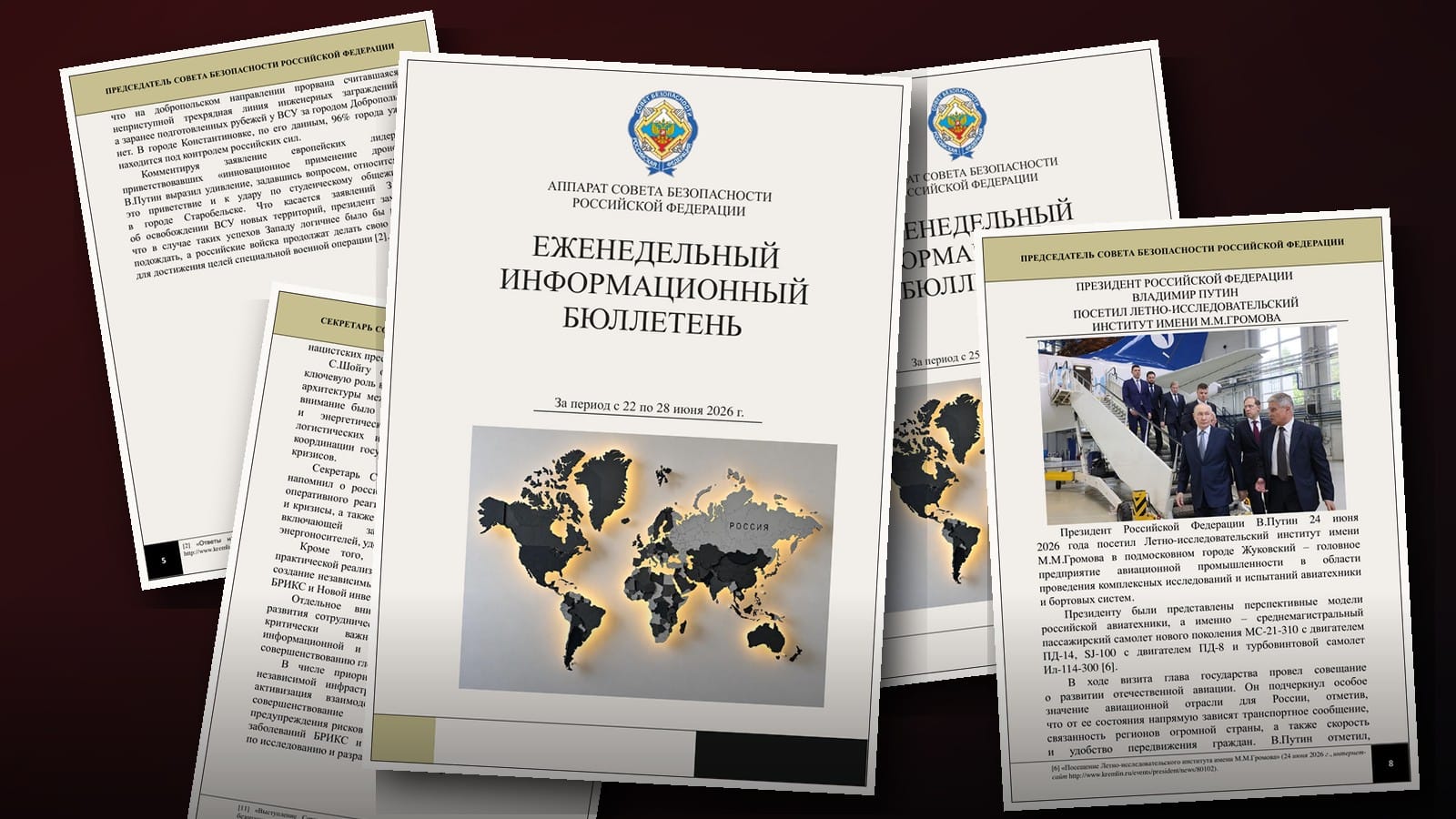
Every week, the Kremlin tells the world what’s on its mind. The Security Council of the Russian Federation (the SCRF, or “Sovbez”) publishes a substantial Russian-language digest — its Weekly Information Bulletin — with play-by-play reviews of the latest security developments, as seen from Moscow. These reports are useful analytical artifacts not because they accurately portray world events, but because they reflect the stories that the Kremlin tells itself and its network of allies to sustain a war that most Western observers see as a disastrous folly.
However, these narratives should not be dismissed, as they telegraph clues about how the Kremlin will behave in the weeks, years, and decades ahead. And while it’s tempting to think of Putin as a singular or rogue actor, he is merely a manifestation of a durable Russian worldview that will persist long after he is gone.
We collected SCRF reports from the last three months and analyzed them to extract common topics and themes — and the Kremlin’s takes are so misaligned with Western perspectives as to seem ludicrous. But it is precisely this misalignment that leads to gaps in our strategic response. When we fail to understand the worldview of our adversary, we will fail to anticipate their behavior.
You must log in or # to comment.