
- cross-posted to:
- [email protected]

- cross-posted to:
- [email protected]
I’m aggregating some tutorials, libraries, and parts for the raspberry pi pico. I’m in the process of making a chiptune tracker on the pi pico and as I’ve been researching I’ve gathered a lot of links and stuff. So I figured I’d compile it into a public thread. Also its just a nice format to be able to go through myself. if someone could lmk if they know something similar that already exists that would be awesome & could potentially merge resources with it
You must log in or register to comment.
Circuitpython on the pico is rad. I use it almost every day.
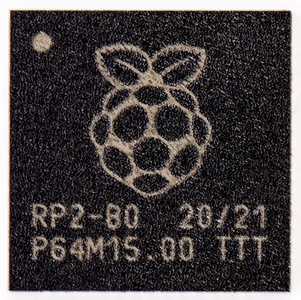
This is about the pico 2, not the original, but would you know of a reason to use the RISC-V cores other than “Oh cool, it supports RISC-V now!”?
I’ve only used the ARM cores, and from what I remember from the documentation, the RISC-V cores didn’t beat ARM ones in anything. If I remember correctly the RISC-V cores also had a few limitations, like lacking FPUs.
Every single pico 2 build has two of both types of cores, so they have to have some use, right?
I could somewhat understand it if you could use more than two cores at once, but you can’t.
I’m not goated enough to know about that, also I’ve never used the pico 2, but I’ll keep an eye out. I get the feeling that they’re just trying to push RISC-V forward which is cool of them. Or maybe there are some niche applications that need it?
I’m also interested in RISC-V, but it feels weird that the cores are included in every single pico 2.
I guess that allows you to transition from ARM to RISC-V easier, but outside of hobby projects, I don’t see any reason to prefer the pico 2’s RISC-V cores over a RISC-V -only μC.
I just wish that they’d give a reason to use it over ARM. As I understand it, currently it’s in practice just a less effective version of the ARM cores without a FPU. For example, something like advertising a cool extension ARM doesn’t have, or making a RISC-V-only version for a bit cheaper.