
From BBC
Rare owl spotted in wild after zoo escape
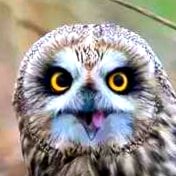
A large owl that is rarely seen in the UK has been spotted in a Wolverhampton tourist spot after escaping from a nearby zoo.
The female
Verreaux’sMilky eagle owl has been sighted perched in the pine trees of Wightwick Manor and Gardens, in what has been described by a wildlife enthusiast as “basically impossible”.The huge bird of prey, which is native to southern parts of Africa, had escaped while on loan for a breeding programme at Wild Zoological Park - about seven miles (11km) away.
After several unsuccessful rescue attempts, it has been agreed by the National Trust, which runs the site, that she can stay in her new home.
A spokesperson said: “She is unlikely to be a threat to the ecological balance in the area, no more so than any other avian predator, such as falcons or buzzards, or a fox. We will keep an eye on wildlife in the area as part of our routine checks and keep in contact with Wild Zoological Park.”
“It’s important that members of the public remember she is a wild animal and should be treated as such; with respect and admiration from a distance.”
Visitors have taken to social media to share their sightings of the “majestic” bird which caught the eye of local wildlife content creator James Cook.
“It’s a very imposing, impressive thing to see. I was in awe,” he told the BBC.
The 31-year-old from Leamington Spa added: "I’ve seen them in South Africa and spoke to a couple of people who said that it’s been here for about three years on and off.
“After a quick search, there it was, sitting in the tree looking all majestic and glorious.”
The
Verreaux’sMilky Eagle Owl are among the biggest and heaviest of all of the owls, the Owls Trust has said.As apex predators, owls sit at the top of the food chain and play a pivotal role in maintaining ecological balance.
They serve as natural regulators of rodent numbers, curbing potential ecological imbalances caused by unchecked populations.
Cook, who travels the UK in search of “weird and wonderful wildlife”, often posts his findings across his social media pages under the name Wildlife With Cookie. On Instagram he has more than 166,000 followers.
He said: “They don’t get here naturally, so it’s basically impossible to spot them in the UK in the wild but, this one would have escaped from somewhere nearby. It’s super mega rare. It’s the only one I’ve seen in the UK.”


Poo on Verreaux.
I haven’t read the full thing yet, but I skimmed this doc I found quickly looking for something to fill you guys in on the brothers Verreaux and why they are not popular these days and why there are ongoing efforts to rename animals named after people. No need for beautiful animals like this owl to have the name of some people who did some pretty not great stuff.
TL;DR - They were racists that trafficked human bodies (and possibly living people) for pseudoscience entertainment.
That was an insane read, not the least of which is: “was on display until 1997”.
Update since the linked article was written in 2002.
A few years ago, I went to the Carnegie Museum and heard this piece was there. That’s when I first learned the full story.
There is a rather extensive Wikipedia article about the display due to its long controversial nature. There was indeed human remains still inside the replacement human model, and it remained on display until the end of 2023. (Pictures of the display are in the article. You don’t see the skull or anything, but if you don’t want to see an object containing that kind of thing, don’t click.)
I know there has been other recent news of England returning human remains stolen by outsiders, so I hope the same can be done with those that have made their way to America.
Agreed. Also agreed, however, that “Milky” isn’t focus-group testing well at all.
Lemmy Eagle Owl it is.
It isn’t my favorite name either, but a lot of animal names are pretty bad.
Screech Owl doesn’t screech. American Barn Owl is Tyto furcata, which means forked-tail, but it does not have a forked tail. The adorable Boreal Owl is Aegolius funereus, meaning a funeral bird of ill omen, when it’s the cousin of the cute little Saw Whet. The ones with onomatopoeia names or named after where they are actually found are probably the best animal names. Animal nerds seem to not be good at naming things.