

From Doc’s Veterinary Wildlife
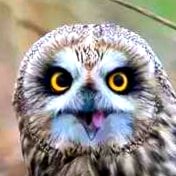
The “Goshen Owl” was found last week unable to fly. Upon presentation, he had weakness in his right wing as well as the inability to fully use his left leg. X-rays showed pelvic and spinal trauma most likely from being hit by a car. Treatment included medicine for pain, laser therapy, and plenty of rest and supportive care. Over a week later, he is doing better and is once more able to fly, however needs more time for his leg to improve. These cases can take a long time to heal.
Could you tell me more about the laser therapy? Does it aid healing muscle damage?
I will be straight with you. I’ve been lightly flamed for sharing laser/red light therapy before. I won’t say it is bunkum. Lots of people use it. My clinic uses it. I’ve never personally used it myself on myself or anything else (treatment isn’t part of my role in animal rehab).
It is a newer method of alternative therapy that is basically still experimental. There is no consensus currently on if it does anything or not. What it sounds like from my reading is a hands-free massage. It warms, supposedly causes vasodilation to increase bloodflow and reduce swelling, may or may not reduce scarring, and may or may not speed up healing, and a few other benefits that all, to me, sound like what people expect from a nice massage.
Birds are fairly fragile in a lot of ways, especially ones with injuries we can’t always see, and a physical massage would not be a great idea. If this gives some or all of those benefits, great! We want birds in our care to be comfortable and relaxed. Even if it has no direct medical benefits, stress is a huge killer of captive wildlife, especially ones with additional physical problems.
Some people hate on it like other alternative therapies, and that the devices also get sold as beauty treatments don’t help skeptics. There’s no consensus on what types/wavelength/etc of light to use or anything like that. Data and observation needs to be done to find out if there is anything to this or not, and that is exactly what people using these things as part of a treatment regimen is doing. This isn’t replacing any part of this animal’s treatment. It is a supplement.
Here is a brief overview from a veterinary group going over the basics, and here is a research paper where the authors collected and examined a decent number of existing studies and checked for bias and if any conclusions could be determined. The answer they got: more research needed.
Sorry to kinda detour there, but I just want to stop some potential conflict before it starts. I tend to assume we can all remain civil here, but there’s always one or 2 people that can’t just enjoy an owl in shades. 😎
If you’ve got any more questions, let me know, and I will see what I can dig up for you.
Thanks for the detailed response! It sounds like the sort of thing that doesn’t really have any downsides, apart from leaving the owl wanting their own pair of sunglasses to look achingly cool, and may have some benefit, so it’s got to be worth a try. The owl looks pretty relaxed to my untrained eye, do you think they realise you’re helping them, or are they just enduring the strangeness while they’re there?
That’s my thoughts. No harm done. We don’t have time or money to waste, so the clinic heads must be seeing something positive. I’m staying open minded about it.
Animals have individual personalities and they all react to us a bit differently. Some can be very chill, and others are very difficult.
In addition to fight and flight, we also now talk about freezing and fawning. Freezing is what it sounds like, just being still, seeing what is going to happen. Fawning is when they seem like they understand what is going on, but they are following your queues and being compliant in the hope that you won’t hurt them. Think like when a hostage obeys their captor.
They are also intelligent and learn our routines for feeding them, treating them, and other things and some learn what is expected of them. Foxes will run up to the pen door and stand up and wag their tales just like regular dogs, but any other time we walk by they will hide.
If the owl wanted to fight, it could nip or claw or try to fly away and hit them with its wings. Usually once you get a solid grip and they learn they can’t fly, they freeze.
I like their experience to if we were abducted by aliens. We’d be freaked out, and even if they were nothing but nice to us, we’d probably be scared the whole time, not understanding anything they say or do to us, and spend the whole time waiting for them to eat us. Even if we found out after they put us back on Earth they cured all our diseases, we’d still probably need some therapy. Animals don’t even typically help each other, so what we do is a pretty alien concept to the . Animals don’t even typically help each other, so what we do is a pretty alien concept to them.
My vet uses laser therapy on animals after surgery.
It seems to be really popular, and it’s not like we bill wildlife, so I don’t feel so many would do it for zero benefit. Honestly, anything to try and enhance patient comfort, for humans or animals, is ok in my book, placebo or not. Let sick organisms be happy! 😄
I agree!