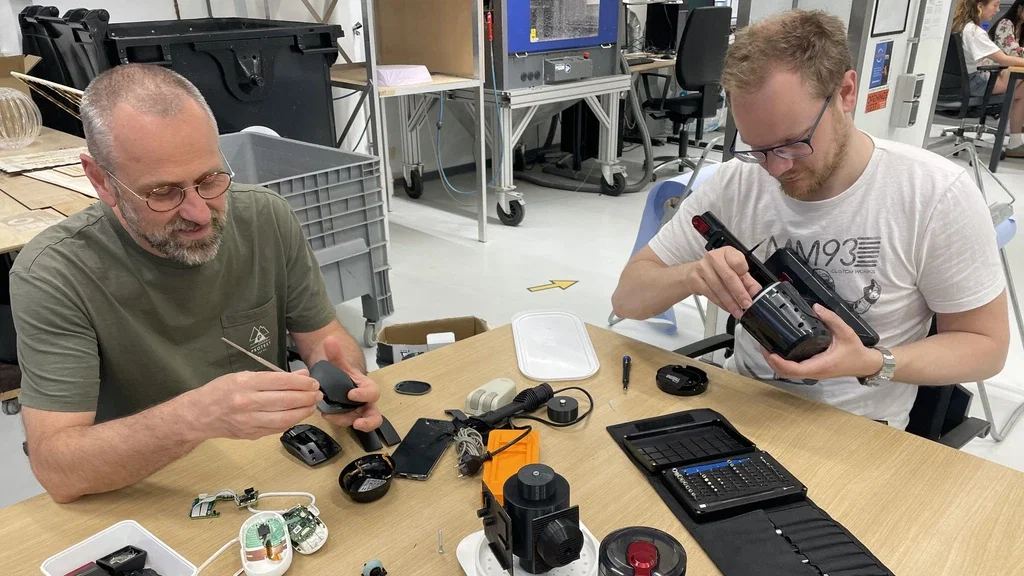
Iedere wasmachine, telefoon of televisie die je vanaf morgen in Europa koopt, moet beter repareerbaar zijn. Dan treedt namelijk de Europese Right to Repair Act in werking. Wat dat in de praktijk betekent, bespreken we met Ruth Mugge, hoogleraar Ontwerpen voor duurzaam consumentengedrag aan de TU Delft, en Oscar Visser, CFO van Fairphone.
The products covered by the obligation to repair currently include:
washing machines and washer-dryers
dishwashers
refrigerators
electronic displays
welding equipment
servers and data storage products
mobile phones, cordless phones and tablets
tumble dryers
e-bikes and e-scooters batteries (from 18 February 2027)
They won’t trust your device no matter how secure you say it is. That’s my point. Just because you say a device is secure doesn’t mean it’s secure, and it doesn’t mean it gets treated as if it’s secure.
You seem to be missing my point. You are arguing against a point I did not make.
I’m not the owner of that laptop, I would just be a user. So with my argument I wouldn’t have a right install my own keys on it. I don’t need to trust that device. It isn’t mine. It is the one of my employer in that case the bank.
So I never said that the bank should trust my personal laptop with their data.
However, if I am a customer of that bank, and they give me access to my account data from my private laptop or smartphone. Then they have no right to enforce someone else to put their root of trust on my device. I need to be able to trust my device to protect my data, so the root of trust needs to come from me.
If I don’t want to manage my device or if I don’t trust myself to do so, I should be able to transfer my trust temporarily to some other third party, and pay them to do it for me.


Yes, and you seem to have missed the point.
They won’t trust your device no matter how secure you say it is. That’s my point. Just because you say a device is secure doesn’t mean it’s secure, and it doesn’t mean it gets treated as if it’s secure.
You seem to be missing my point. You are arguing against a point I did not make.
I’m not the owner of that laptop, I would just be a user. So with my argument I wouldn’t have a right install my own keys on it. I don’t need to trust that device. It isn’t mine. It is the one of my employer in that case the bank.
So I never said that the bank should trust my personal laptop with their data.
However, if I am a customer of that bank, and they give me access to my account data from my private laptop or smartphone. Then they have no right to enforce someone else to put their root of trust on my device. I need to be able to trust my device to protect my data, so the root of trust needs to come from me. If I don’t want to manage my device or if I don’t trust myself to do so, I should be able to transfer my trust temporarily to some other third party, and pay them to do it for me.