

- cross-posted to:
- [email protected]
- cross-posted to:
- [email protected]
cross-posted from: https://lemmy.world/post/53694832
The boom is set to produce enough greenhouse gases to cancel out 15 years of declines in power-sector emissions, according to a Sierra Club analysis.
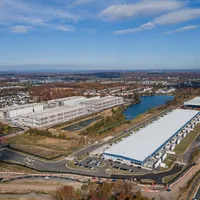
Brownfield development would be perfect for data centers, but it’s slower and costs more.
There isn’t undesired water or electricity sources available at anything like the scale the AI companies want though; these things use truly huge amounts of energy
This is my second followup reply to the same circumstances described:
Lake Boehmer is a roughly 60-acre body of water in west Texas that sprouted from a former oil well that’s been allowed to leak since 1951. It produces 642 gallons of toxic salt and sulfured water a minute. It is undrinkable and simply spilling out on the ground. A 100MW datacenter consumes 367 gallons per minute, so not quite half of what is coming out of the ground every minute. Additionally the existing 60 acre lake can also be drawn from to increase the water consumption. There are also almost no one living out there meaning it would not impact the quality of life of residents.
West Texas is also the home of some of the largest wind farms in the USA producing 11.431GW of electricty. Wind, unlike solar, also has 24/7 generation, which more fits the model of a data center for power consumption. Solar could also be installed to supplement during daylight ours of course.
There is also lots of unused land out there. There are a number of datacenters already going up in west Texas so the know-how to build them already exists locally too.
Water that salty is corrosive. You can’t just use it for datacenter cooling (or running a power plant) without removing the salt at considerable cost. It’s cheaper to bribe politicians to transfer fresh water into their use than it is to desalinate that and use it.
Using traditional systems designed for fresh water sure, but there are methods to using high saline water already. Here’s the science . It also likely won’t surprise you to learn that the nations in the Middle East already has high saline evaporation cooling deployed in industrial applications for years now.
A solution doesn’t have to be 100% perfect to be an improvement.
Lets take an example of what I would consider a fairly advanced Landfill energy management site. Columbus Ohio SWACO (Solid Waste Authority of Central Ohio) operates a commercial landfill gas (methane) recovery operation. Today that methane powers the municipal buses, garbage trucks, and snow plows (in winter). Excess beyond the city needs is fed back into the natural gas pipes and sold at commercial rates to residential, commercial, and industrial customers. They’ve been operating this successfully for 11 years already.
The operation currently produces approximately 3,800 MBTU of methane daily. A high efficiency methane power plant (at 50% efficiency) would generate 557 MWh of electricity daily from that. More than half a terrawatt of electricity is certainly in the small to medium sized DC.
Further, the landfill produces 26 million gallons of leachate waste water. This is only a fraction of the water an Open Loop cooling system uses, but its a current waste produce, and its already onsite in the exact same location as the landfill gas which potentially could be used to offset other water usage.
Again, its not a perfect replacement for the land, water, and power, but its a very significant offset. A number of Ohio landfills are doing much the same as Columbus, and some are even supplementing with PV solar overtop of the landfill. If a DC was built on the Columbus landfill, the roof and remaining land could be covered with solar PV, and the recovered landfill gas stored during high solar production hours allowing even more gas available for electricity generation in the non-solar hours.
A single new datacenter in the pipeline from Amazon is going to consume above 7000MW. Landfill can and should be burned in useful ways, but it’s not going to supply anything like what the tech industry is planning to use.
Right, I addressed that. It doesn’t be a complete net zero replacement. DCs are going to be built. Any offset is an improvement on the status quo. Building on the landfill isn’t just about the electricity, its about reducing water consumption, land use, and impact on residents.
That size of DC is the exception not the rule. Its the largest DC ever prospose in the USA. The currently largest built DC in the world is only 1000MW
Partial offset doesn’t stabilize temperature. It’s going to need to be 100%
They’re not even trying though
If you’re seeking a single silver bullet to the problem, you’re never going to find it. It will be a combination of solutions. My proposal is just one of them.
There’s some trying, but not enough for my liking. Google has DCs are run by hydropower (with more being built). Microsoft has bought up an existing decommissioned nuclear power plant to put it back into service. Its not enough, but its also not nothing.
I’m not looking for a silver bullet. But part of success is demand avoidance. And creating demand at the scale the datacenters are doing is going to make it far far harder to get to zero.
I don’t disagree, but if climate change is your primary concern, Datacenters are a tiny contributor at 0.5% of global CO2 emissions (and CO2 isn’t even the only green house gas). Even still, the demand avoidance argument doesn’t dismiss or negate the reduction benefits derived from using landfill gas, toxic water sources, and polluted land.