

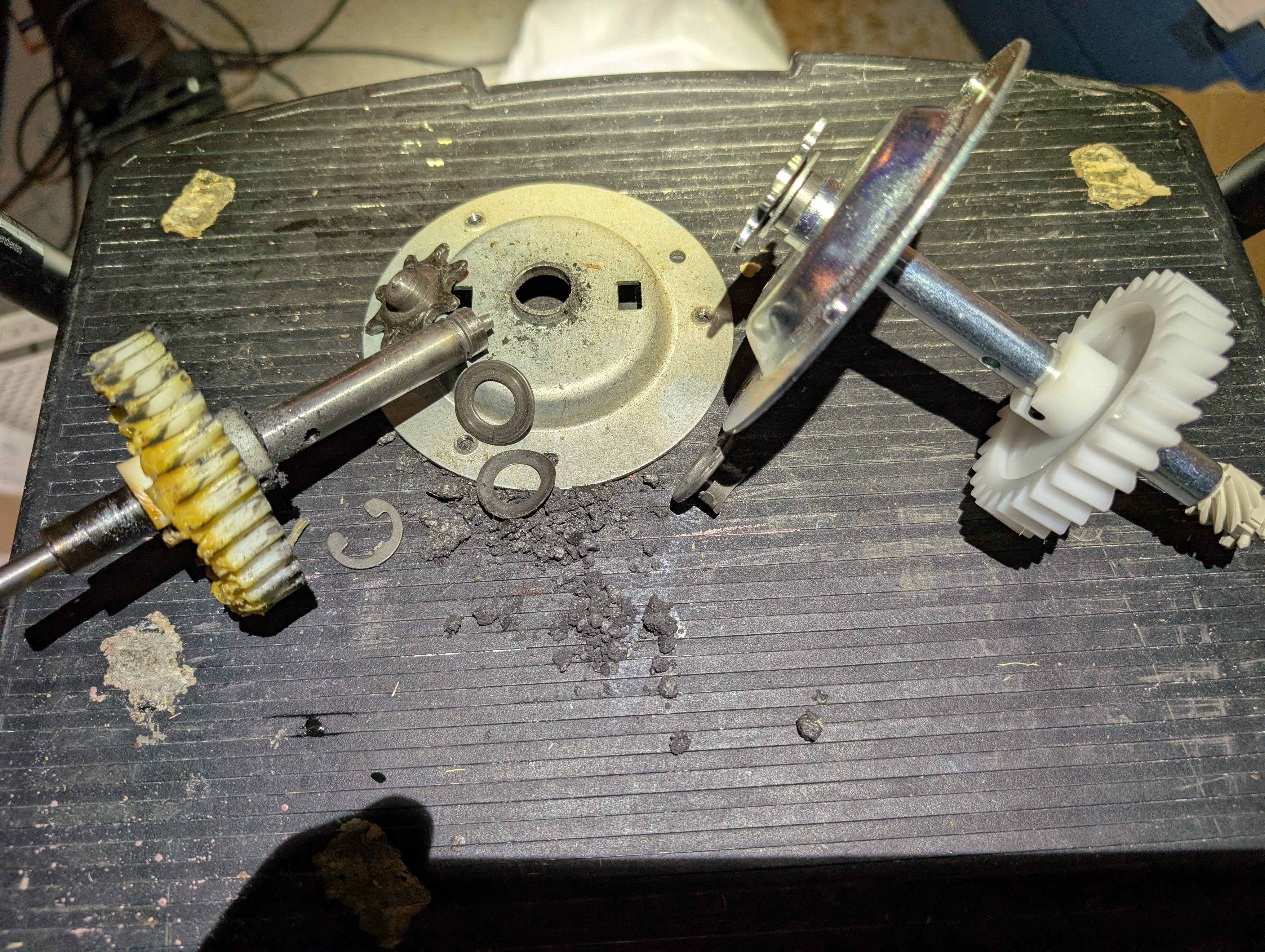
On the right is a new gear/cog for a 20+ year old garage door motor. On the left, is the one I had to replace because the cog had sheered off and ground its self into nothing.
On the right is a new gear/cog for a 20+ year old garage door motor. On the left, is the one I had to replace because the cog had sheered off and ground its self into nothing.
One of the primary uses for nylon gears in equipment is to protect the other components of the system; the nylon gear will shear teeth before the other, far more expensive or complex components are damaged.
That’s likely what happened here. For such an old system to still have components available is impressive. A big factor in that being feasible for the company is that this is likely by far the most common component to fail, so they don’t need to maintain a full production line to offer support for their equipment.
Plastic gears aren’t ideal in many situations, but they are logistically extremely valuable.
My first car ever was about 20 years old at the time. One day the window stopped working and I ended up taking the whole thing out disassembling it to figure out how to fix it. I noticed immediately that the plastic gear had just come apart and I could replace it to get the window working again. After some thinking, I’d realized that it was probably for the best because I’m sure whoever got a finger or hand stuck in the window would be very glad the gear would act as a failure point instead of their entire finger being crushed or severed in the window frame… So yeah. Definitely cool with plastic gears in situations like these