
From Lonely Camp
A nine-inch owl that lives underground cannot dig its own home. It nests in holes that something else made, and across most of the American West, the something else is a badger.
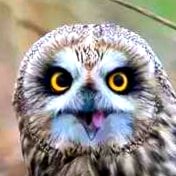
The western burrowing owl stands about nine inches tall and weighs less than a can of soda. It has long legs for an owl, oversized yellow eyes, and a flat head that sits low between its shoulders like a bouncer watching a door. It hunts insects and small rodents in open grassland. It raises its chicks underground. And in most of its range, from the Canadian prairies to the Mexican border, it cannot breed without access to a burrow that was dug by a mammal it has never met.
The American badger is that mammal. A twenty-five-pound mustelid with claws built for excavation, the badger digs constantly. It digs to hunt ground squirrels. It digs to create day dens. It digs natal dens for its young. It digs exploratory holes testing for prey scent. A single badger can excavate a burrow system several meters deep with multiple entrances in a matter of hours, displacing hundreds of pounds of soil in a single digging session. Then it moves on. A badger does not stay in one burrow for long. It rotates through dozens of dens across a home range that can cover twenty square kilometers. The burrows it leaves behind do not collapse immediately. They persist in the soil for months or years, and the moment the badger moves out, everything else moves in.
In 2021, researchers in Wyoming published the first systematic study of what they called the burrow web, the network of species that depend on abandoned badger burrows the way cavity-nesting birds depend on old woodpecker holes in trees. They deployed camera traps at twenty-three abandoned badger burrows across rangeland in Wyoming and documented every species that used them.
Thirty-one species. Twelve mammals, eighteen birds, and one reptile. All using holes dug by one animal.
The list includes cottontail rabbits sheltering from raptors. Ground squirrels expanding existing tunnels. Coyotes investigating for prey. Swift foxes denning in excavations too large for them to have dug themselves. Weasels hunting rodents inside the tunnel network. Deer mice nesting in side chambers. Mountain plovers using the soil mound at the entrance as a nest platform. Rattlesnakes thermoregulating in the temperature-stable environment below the frost line. And the burrowing owl, nesting and raising chicks in a burrow it located, cleaned, and moved into because the badger that built it was already gone.
The owl’s dependence on the badger is not casual. In the Columbia Basin of Oregon, researchers found that burrowing owl nesting success was directly tied to the availability of badger burrows. Owl nesting density was higher where badger activity was higher.
Where badgers had been removed or had declined, owl populations declined with them. The relationship was not a correlation. It was a dependency. The owl could technically dig its own burrow in soft soil, and rare instances have been documented, but studies suggest that owl nests in self-excavated burrows have higher failure rates than nests in mammal-dug burrows. A badger burrow is deeper, more structurally sound, better insulated, and has the bend in the tunnel that prevents a predator from looking directly into the nest chamber. The owl did not design that architecture. The badger did, for its own purposes, and the owl inherited it.
The paradox at the center of the relationship is that the badger is also a predator of the owl. A badger can and will dig into an occupied burrowing owl nest and eat the eggs, the chicks, or the adult if it catches one underground. The owl nests in the homes of an animal that is capable of killing it in the same structure. The owl manages this by selecting burrows that are clearly abandoned, by nesting in burrows with multiple escape exits, and by posting a sentinel at the entrance that produces a warning call at the first sign of a returning predator. The warning call for a ground predator approaching the burrow is a rapid chattering alarm. The warning call for a threat inside the burrow is a hiss that mimics a rattlesnake, which is effective enough that researchers working in the field have been fooled by it.
The burrowing owl has declined across most of its North American range. It is listed as endangered in Canada, as a species of special concern in California, and as a species of conservation concern in most western states. The causes are the same everywhere. Habitat loss. Conversion of grassland to agriculture. Poisoning of prairie dogs and ground squirrels, which removes both the prey base and the burrow supply. Vehicle strikes on roads that cut through nesting habitat. And the decline of the American badger, which removes the animal that built the infrastructure the owl depends on.
Conservation biologists have responded by installing artificial burrows. Plastic buckets buried in the ground with PVC pipe tunnels leading to the surface, placed along agricultural fields, golf courses, airports, and abandoned lots. The artificial burrows work. Owls use them. But the installation is labor-intensive, site- specific, and requires ongoing maintenance. A badger does the same job for free, continuously, across its entire home range, and provides burrows to thirty other species in the process.
The American badger is listed as a species of special concern in California. Its population has declined across fragmented landscapes where grassland habitat has been converted or bisected by roads. A badger killed on a highway is not just one dead badger. It is a burrow-digging engine removed from the landscape, and every species that depended on its excavations, the owls, the rabbits, the foxes, the snakes, the ground-nesting birds, loses access to the underground architecture that the badger would have built over the remaining years of its life.
A twenty-five-pound animal that most people have never seen is building the housing stock for thirty-one species across the grasslands of the American West. The nine-inch owl that tourists photograph standing at its burrow entrance did not build that burrow. A badger did. The badger is gone. The owl is home.
Source: Andersen et al. (2021). “Burrow webs: Clawing the surface of interactions with burrows excavated by American badgers.” Ecology and Evolution. / Green and Anthony (1989). Journal of Raptor Research. / Owl Research Institute.


Edit: Guys, if you upvote this, you gotta upvote the badgers too, so it stays below them!
I have learned of a new thing today! 😄
🦡 🍄 🐍


Just a reminder, if you have t come across it yet, I been regularly posting to [email protected] for a bit now, along with a few other folks trying to revive that community.
If you like what I do here, feel free to see me share some other amazing animals over there.

