
*eye twitch
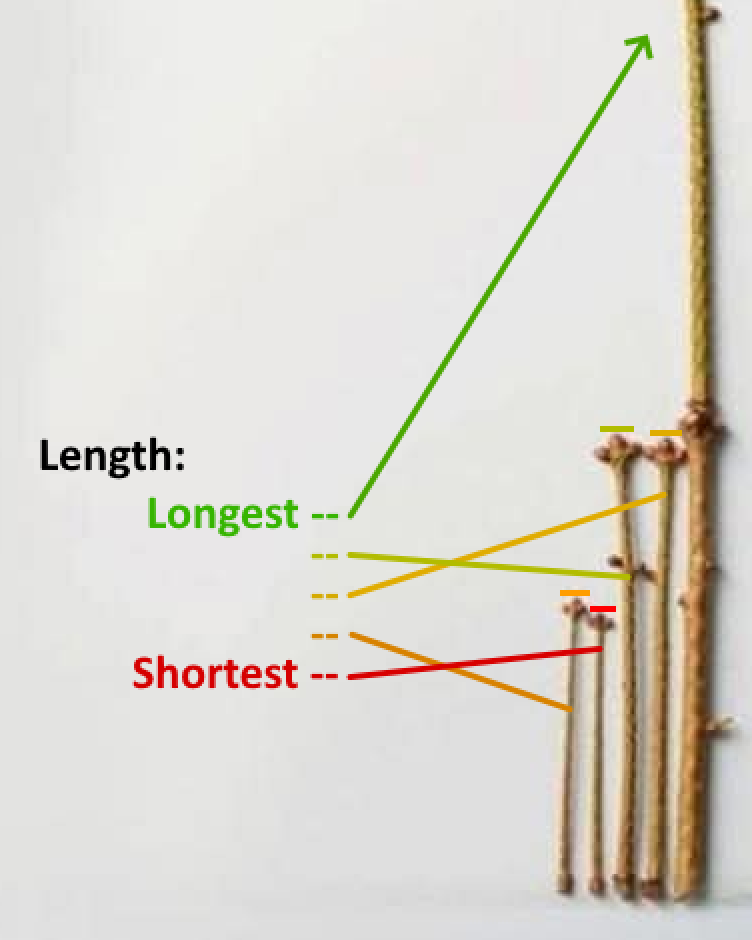
Easy solution - it is first grouped by type and then groups are sorted by average length
Now I’m sad
Theyre both pretty well ordered…
This is sorta like comparing a bar chart with a radar chart
That’s kind of the point I took from it? Would it help if you imagine there was a direction arrow labelled “entropy” between them?
Infinite Order

The recursion formula behind life itself? (video)
Fractals in the Biological Sciences (pdf)
Spectra of Reduced Fractals and Their Applications in Biology (pdf)
I’ve never been able to explain why I feel the way I do when looking at the bifurcation diagram
In a weird way, fractals make more sense than non-fractals.
I suspect because they occur everywhere in nature (in trees, water channels, shorelines), and the eye has evolved to expect them.
but I also get this intrinsically comfortable feeling, as if every cell in my body finds it familiar.
Check out Kleinian Double Cusp Limit Sets.
They’re so satisfying.
Hmm I would say the reverse.
Edit
Guess I have age dyslexia. I thought text was the other way around.
Carry on
Hail Eris!
OrderFunctionChaosFormLiterally both form, function would be an image of supplying nutrients to the rest of the plant which, one might note, it can’t do and so its function is disabled in both.
More like chaotic good
Reaaaaaaaaaal
I’ve always had some trouble with the notion that “the universe always becomes more chaotic”. Isn’t the universe always on its way to having a perfectly evenly distributed layer of energy, and isn’t that quite orderly?
It’s evenly distributed because it’s all mixed together. Order: 15 buckets of paint in a rainbow of colors. Swirl them all together and you get an increase in entropy, it’s hard to pick out spots with pure color, there are a bunch of weird mixtures where the colors touch, it’s really difficult to paint with. Mix them all up completely and you get a uniform brown sludge. That’s chaos, you can’t separate them back out, all the individual pigments are hopelessly commingled.
Think of a box with 4 particles a, b, c and d. If every particle is on the left side of the box, then there is only 1 way to divide them up. [(a, b, c, d), ()]
If there are 2 particles on the left side of the box and 2 particles on the right side of the box, then there are 6 ways to divide them up:
[(a, b), (c, d)]
[(a, c), (b, d)]
[(a, d), (b, c)]
[(b, c), (a, d)]
[(b, d), (a, c)]
[(c, d), (a, b)]In total you’ve got 16 possible arrangements, the 2-2 state has the “highest” entropy because you’re more likely to end up with the one that takes up 6/16 arrangements.
Here’s a good way to visualize chaos vs order in this context. Imagine you have a thousand marbles neatly stacked in a pile like cannonballs are. That’s order. They operate as one entity. If you want to move the stack, you must move them all at once and very carefully.
Now imagine those thousand marbles all strewn about your house. They are now a thousand different entities. You can’t interact with all of them at once anymore.
You bring order back to the system by stacking the marbles again. It takes a lot of energy to stack them, and, with enough of it, you can return the marbles back to one entity.
The notion is that entropy increases. That is, the amount of energy you can extract to do work decreases. You need differentials to do work, for example a water wheel works because water at elevation has potential energy which you can use to turn the wheel as it flows downhill to a lower potential energy. When everything is evenly distributed, you can’t extract any more energy to do work.
Oh yes, I understand that. My issue is with describing that as “chaos” or “disorder”.
Chaos is the base, undifferentiated reality. Order, and consequently disorder, is a subjective human concept.
Entropy is described as disorder because the layperson doesn’t know what entropy is, and disorder is equated with disorder because they don’t know what chaos is. Language is inconsistent.
It dowsnt. It gets harder and harder for humans to describe and comprehend.
deleted by creator
The end state would look the same at any focal length.
ive read the book, forgot its name but there is a book with that out there
This makes me want to start a knolling community.